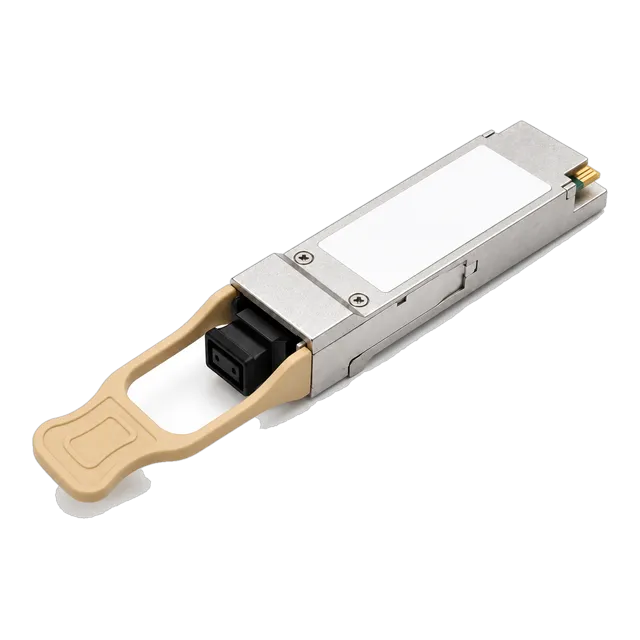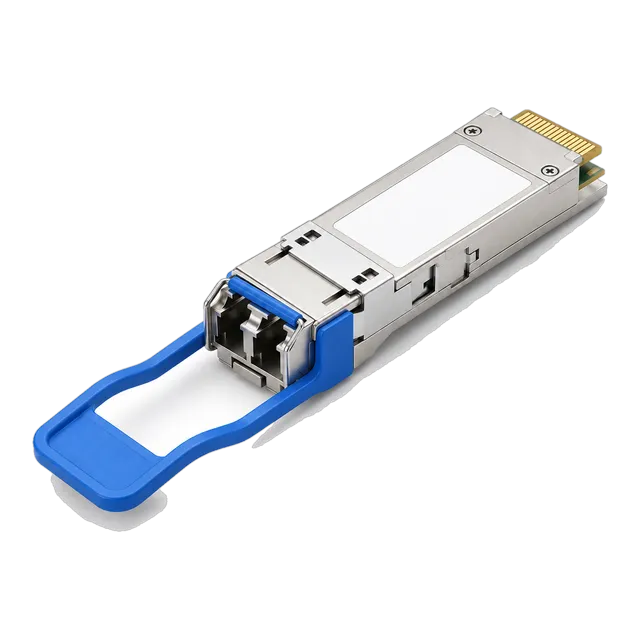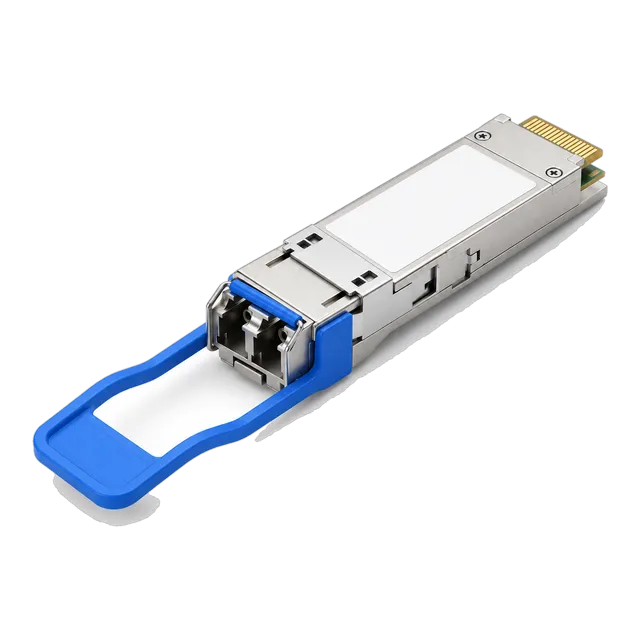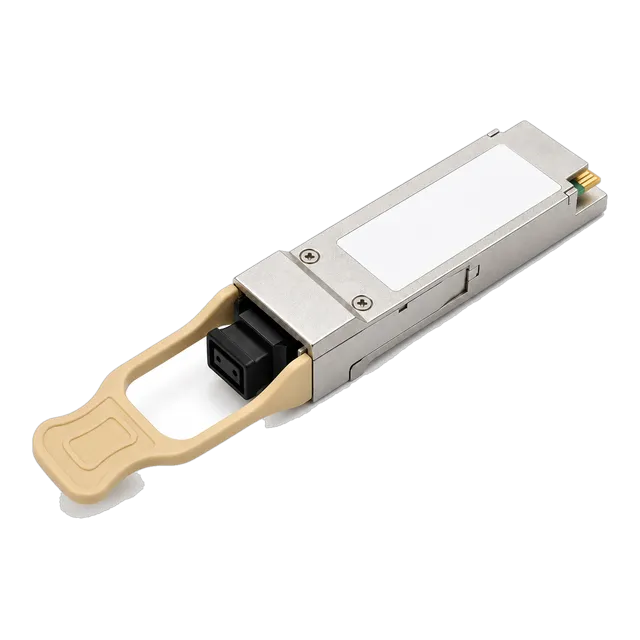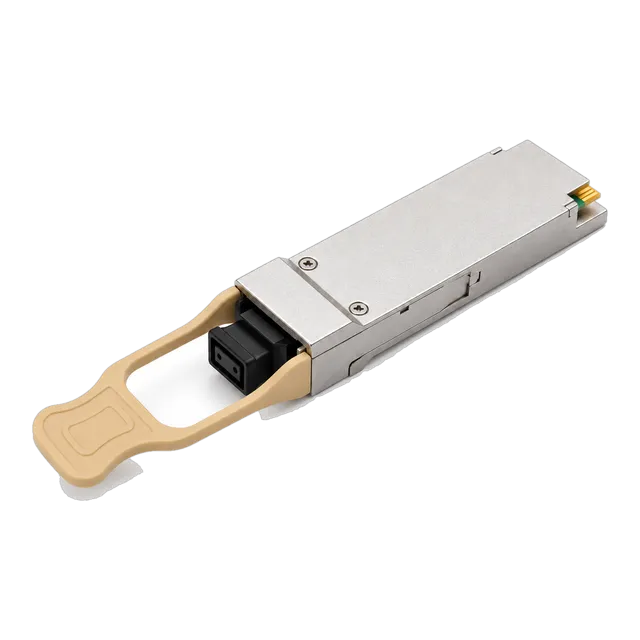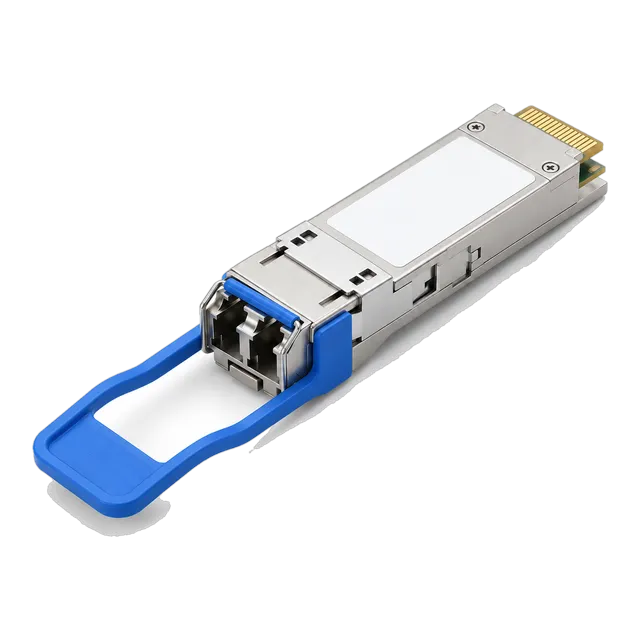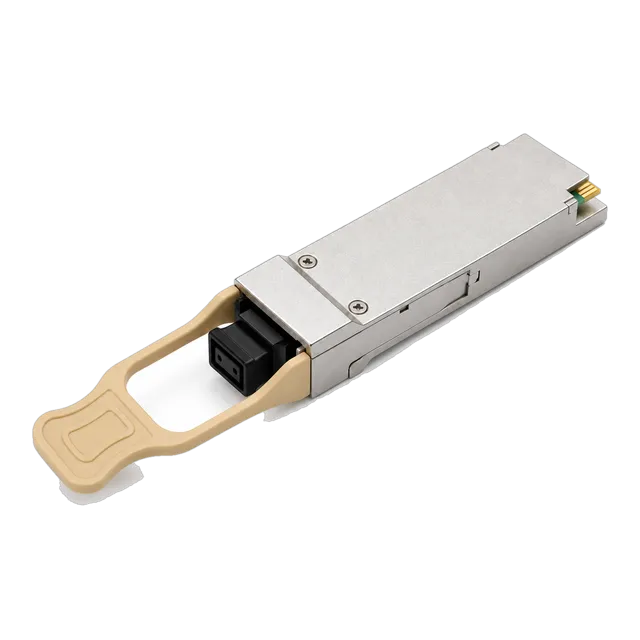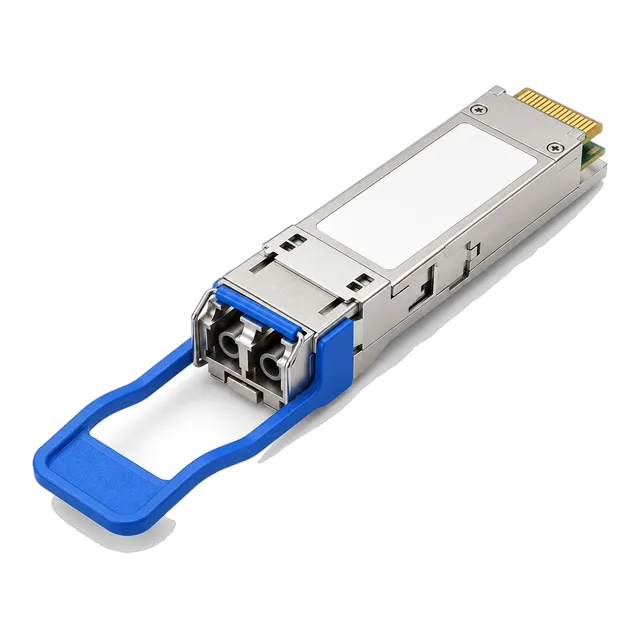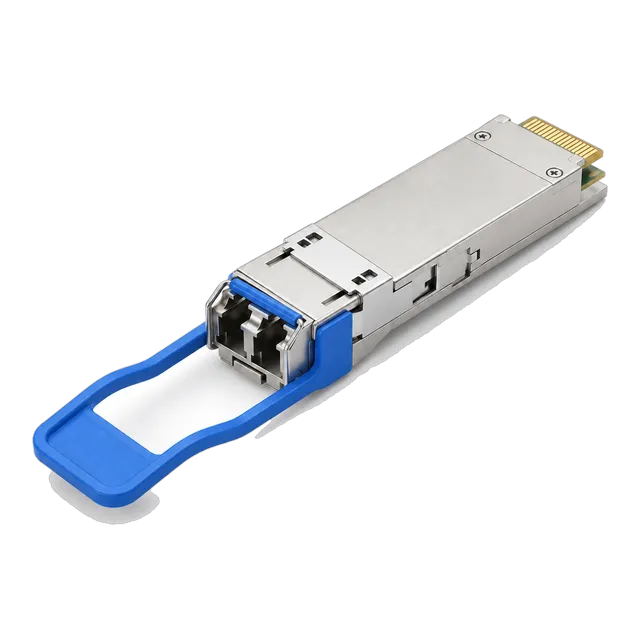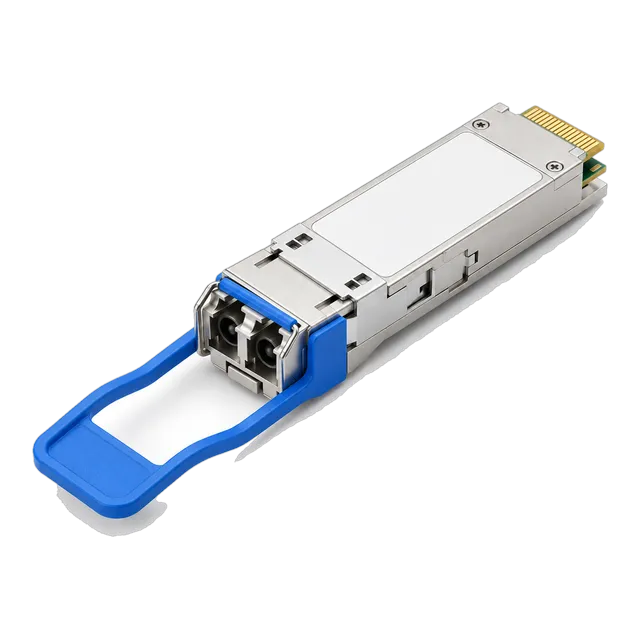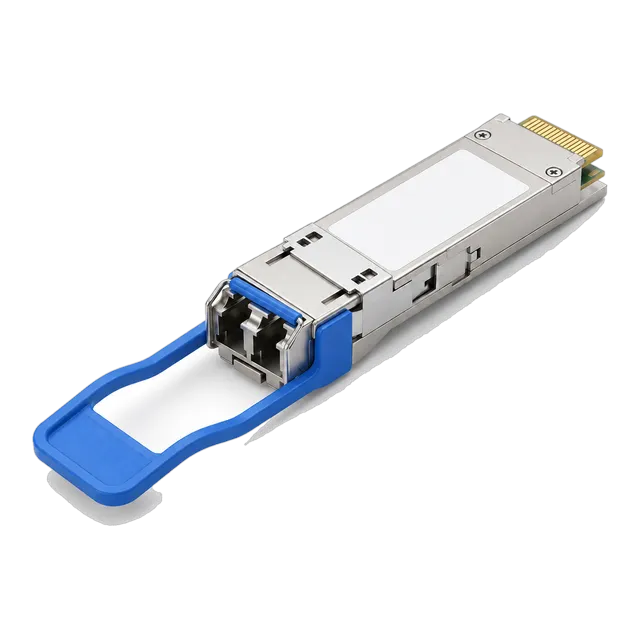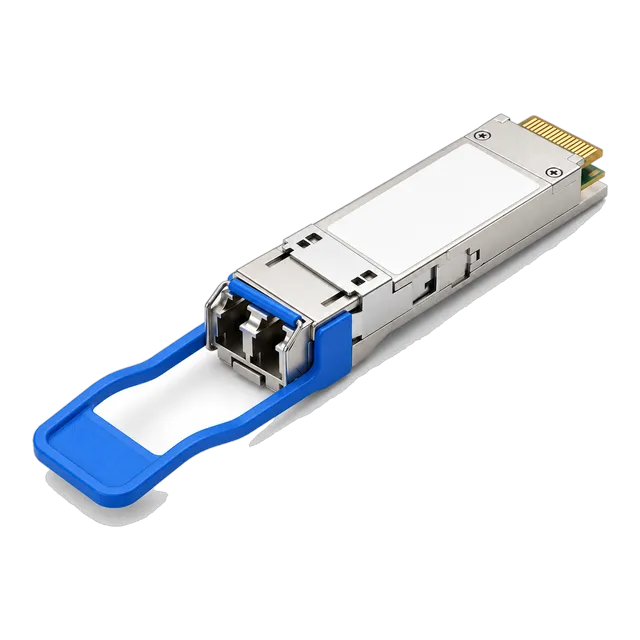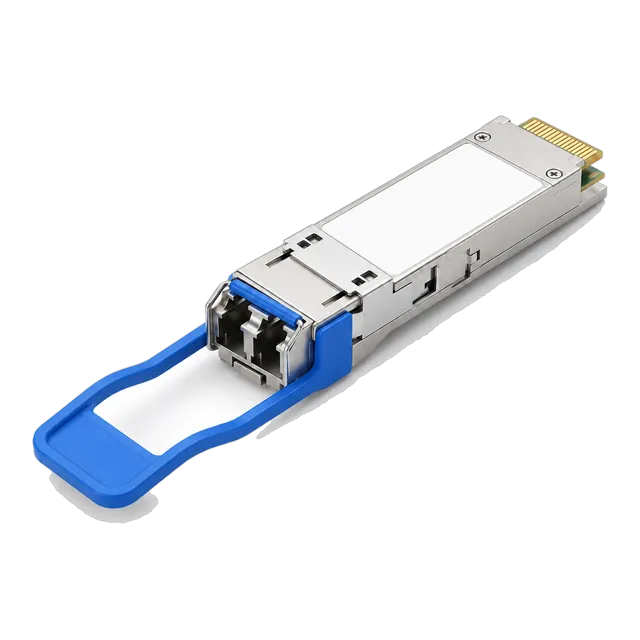
40G QSFP+ LR4 1310nm 10km Single-Mode Duplex LC Optical
- Data Rate40 Gbps
- Wavelength1310 nm (LWDM4)
- Transmission Distance10 km


40G QSFP+ · 15 models
40G QSFP+ transceivers covering 40GBASE-SR4 over MPO multimode, LR4 at 10 km, ER4 at 40 and 60 km, and an 80 km ZR build. Specifications and enquiry.
Buying guide
A 40G QSFP+ carries four lanes of 10 Gb/s in a single pluggable module. The QSFP+ form factor is wider and taller than an SFP and needs a matching cage, and the four lanes are either carried on separate fibres through an MPO connector or combined onto one fibre pair using wavelength multiplexing and a duplex LC connector. All modules in this category run from 3.3 V, are hot-pluggable and support digital diagnostics.
The range follows the standard reach ladder. A 40GBASE-SR4 module uses 850 nm VCSELs and an MPO or MTP twelve-fibre interface, covering 100 m on OM3 and between 150 m and 300 m on OM4 depending on the build selected, which suits switch-to-switch links inside a data hall. Where the link leaves the hall, the multiplexed single-mode variants take over: 40GBASE-LR4 in the 1310 nm LWDM grid for 10 km, with an extended build listed up to 20 km, and ER4 class modules on a CWDM grid between 1270 and 1330 nm for 40 km and 60 km. A ZR class module at 1310 nm extends the range to 80 km. One catalogue entry is published as a series that also lists PSM4 and BiDi options, which should be confirmed individually.
Selection starts with the connector and fibre already installed, since an MPO plant and a duplex LC plant are not interchangeable, then moves to measured loss and to the breakout behaviour the switch is expected to support.
Models
Filter the family, then open a model for the full specification table, illustrations and ordering information.
Selection
40G QSFP+ variants in this range and the link each one suits.
| Variant | Wavelength | Typical reach | Fiber / media | Where it fits |
|---|---|---|---|---|
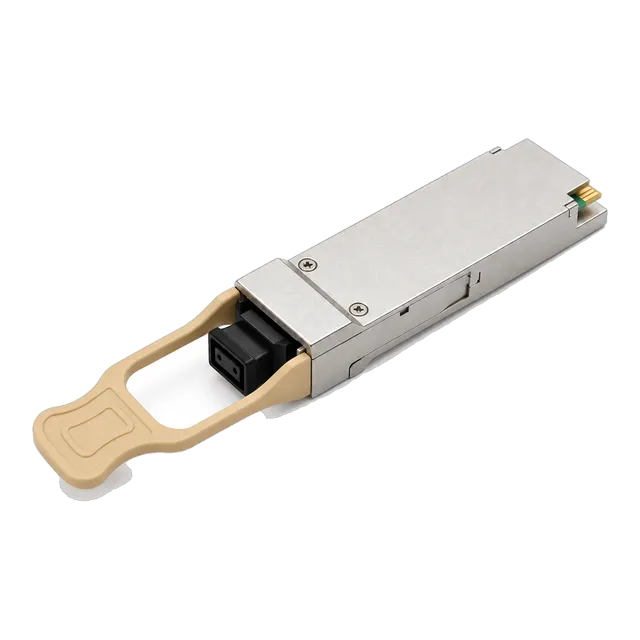
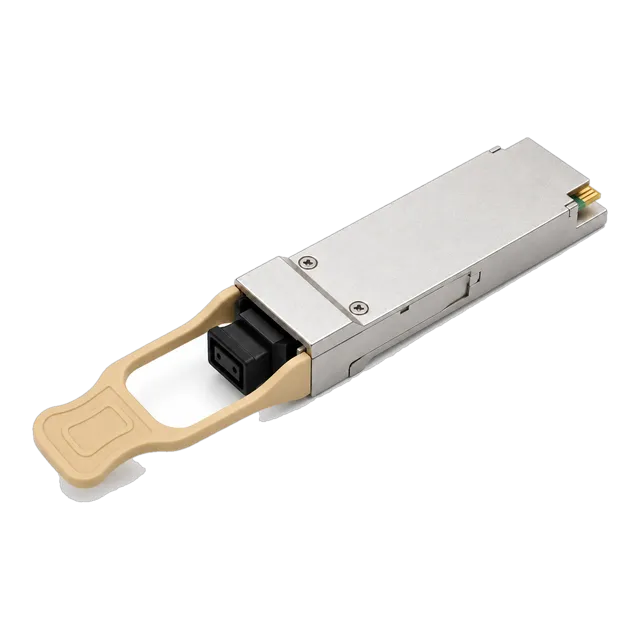
| 40GBASE-SR4 | 850 nm, four lanes | 100 m on OM3, 150 m on OM4 | MPO / MTP-12 multimode | In-row switch to switch links |
| 40GBASE-SR4 extended | 850 nm, four lanes | up to 300 m on OM4 | MPO / MTP-12 multimode | Data hall spine and core uplinks |
| 40GBASE-LR4 | 1310 nm LWDM4 | 10 km | G.652.D single-mode, duplex LC | Building to building and hall to hall |
| 40GBASE-LR4 extended | 1310 nm LWDM4 | up to 20 km | G.652.D single-mode, duplex LC | Campus and near metro routes |
| 40GBASE-ER4 | CWDM4, 1270-1330 nm | 40 km | G.652.D single-mode, duplex LC | Metro links and data centre interconnect |
| 40G ER4 extended | CWDM4, 1310 nm region | 60 km | G.652.D single-mode, duplex LC | Long metro and transport spans |
| 40G ZR | 1310 nm | 80 km | G.652.D single-mode, duplex LC | Long-haul and metro core connections |
Listed values describe the published range. Confirm the exact model datasheet, host coding and installed link before ordering.
Before you order
An SR4 module presents twelve fibre positions in one ferrule, so the trunk cables, cassettes and jumpers have to follow a consistent polarity method across the whole channel. Mixing methods gives a link where transmit meets transmit and nothing comes up, which is difficult to diagnose from the switch. Gender also has to match at every mating point. MPO end faces collect contamination more easily than LC, and a single dirty position takes down a lane, so inspect and clean before every insertion rather than after a fault.
A 40G port can often be configured as four independent 10G ports using a breakout cable or an MPO to LC harness with an SR4 module. Whether that works depends on the switch, which usually has to be told the port is in breakout mode and may reserve neighbouring ports when it is. The multiplexed variants such as LR4 and ER4 cannot be broken out at all, since the four lanes share one fibre pair. Decide the port role before choosing the optic.
The distance an SR4 link achieves depends on the multimode fibre grade. The builds listed here are specified at 100 m on OM3 and between 150 m and 300 m on OM4, so the same module can be quoted differently depending on the design. Older OM1 and OM2 plant is not suitable. Where a data hall mixes generations of cabling, check the trunk records before assuming a cross-hall link will make distance, and treat every connector pair in the channel as part of the loss budget.
QSFP+ cages need a matching mechanical port and a power budget larger than an SFP+ slot, and some switches limit which ports can carry the longer reach variants because of their consumption. Beyond the mechanics, the switch reads module identification from the EEPROM, so coding has to be confirmed against the exact platform and software release. Where a series is offered with several variants under one product entry, confirm the specific build, connector and reach in writing before the order is placed.
FAQ
SR4 sends four separate 10G lanes at 850 nm over multimode fibre using an MPO connector, and reaches from 100 m on OM3 to as much as 300 m on OM4. LR4 multiplexes four wavelengths in the 1310 nm region onto a single-mode fibre pair with a duplex LC connector, and reaches 10 km. The cabling therefore decides the choice: MPO multimode trunks for SR4, duplex single-mode for LR4.
Often yes, using an SR4 module with an MPO to LC harness or a breakout direct attach cable, but only if the switch supports breakout on that port. The port normally has to be configured for breakout mode, and some platforms disable adjacent ports when it is enabled. Multiplexed modules such as LR4 and ER4 cannot be broken out, because all four lanes share one fibre pair.
The SR4 builds here are specified at 100 m over OM3. On OM4 the same module class is listed between 150 m and 300 m depending on the build, so check the specific datasheet rather than assuming. Older OM1 and OM2 fibre is not suitable for 40G. Every connector pair and cassette in the channel consumes budget, so a long cross-hall route should be measured rather than estimated.
An ER4 class module on a CWDM grid between 1270 and 1330 nm is the standard choice at 40 km, with an extended build listed at 60 km and a ZR class module at 80 km for longer routes. All three use single-mode fibre with a duplex LC interface. Obtain a measured end-to-end loss figure for the route before choosing, and keep margin rather than ordering to the exact distance.
Related families
Next step
Send the host platform, the fibre you have and the distance you need. We will shortlist the models that actually work and quote them.