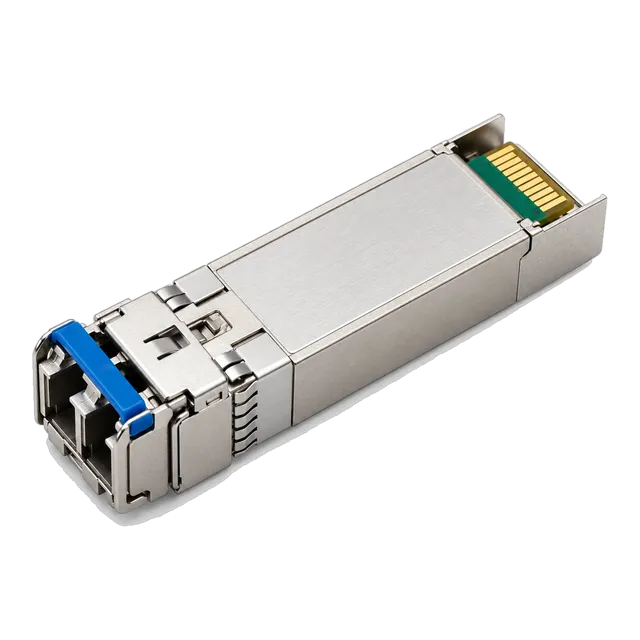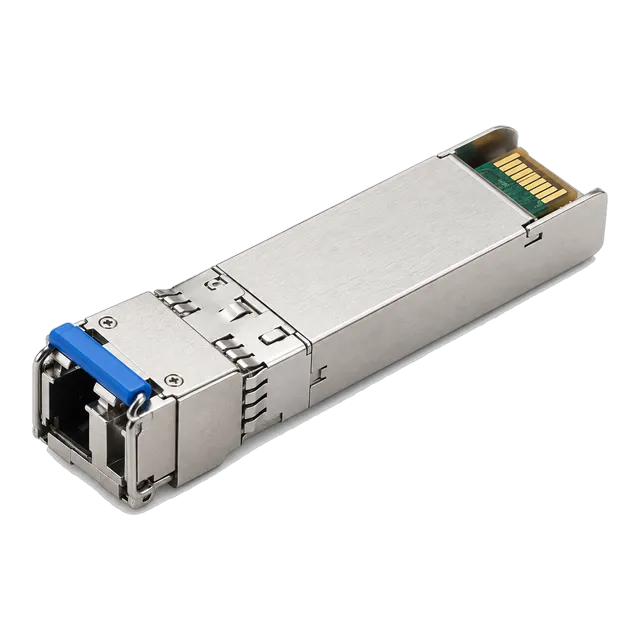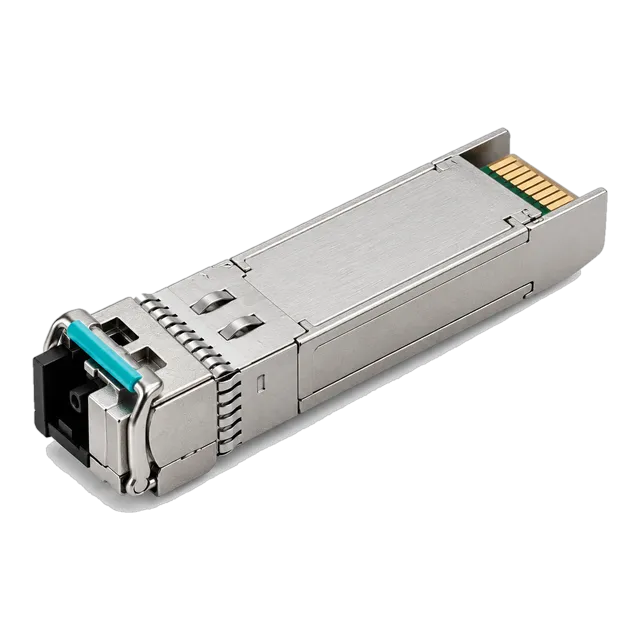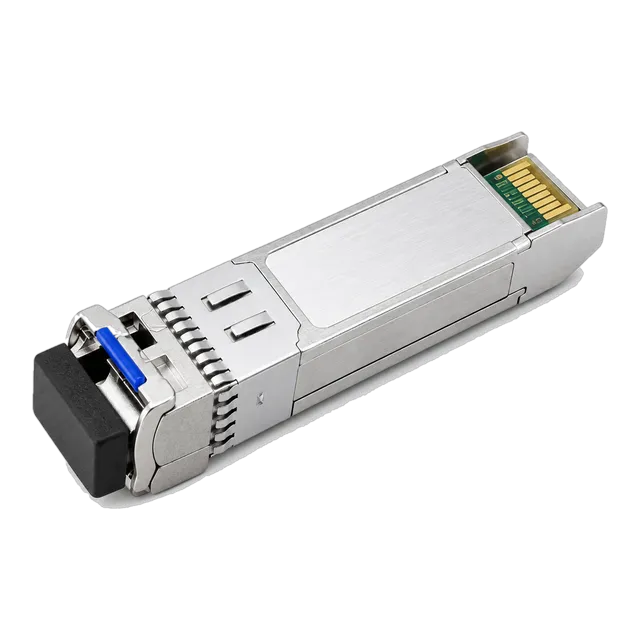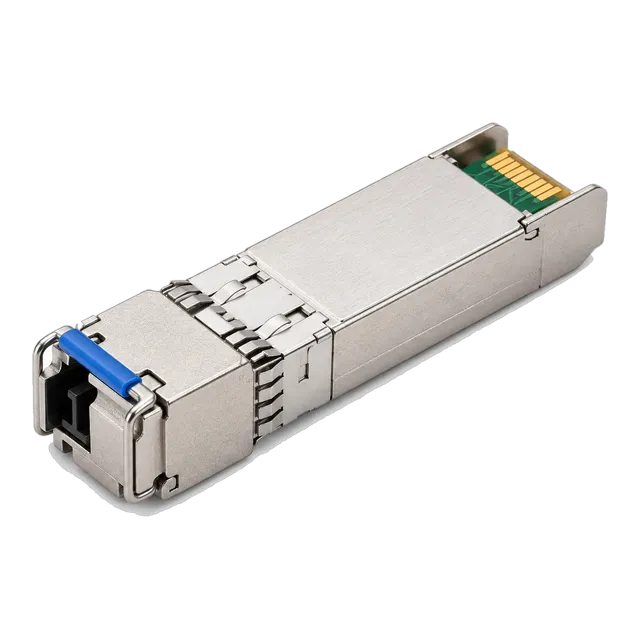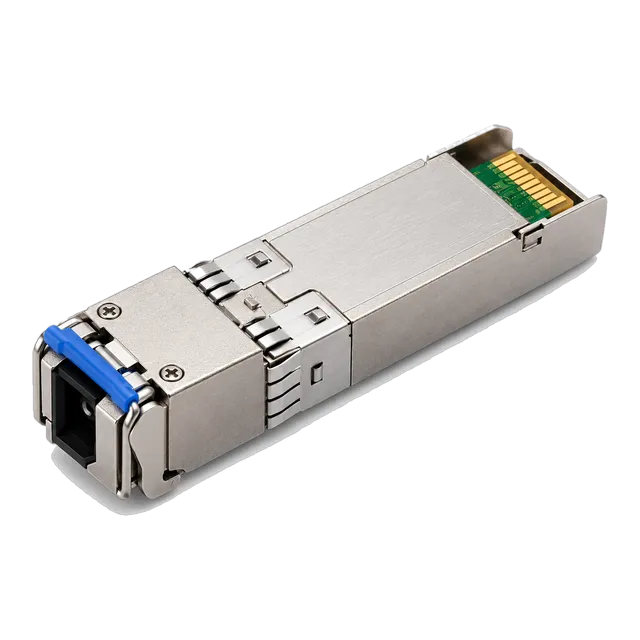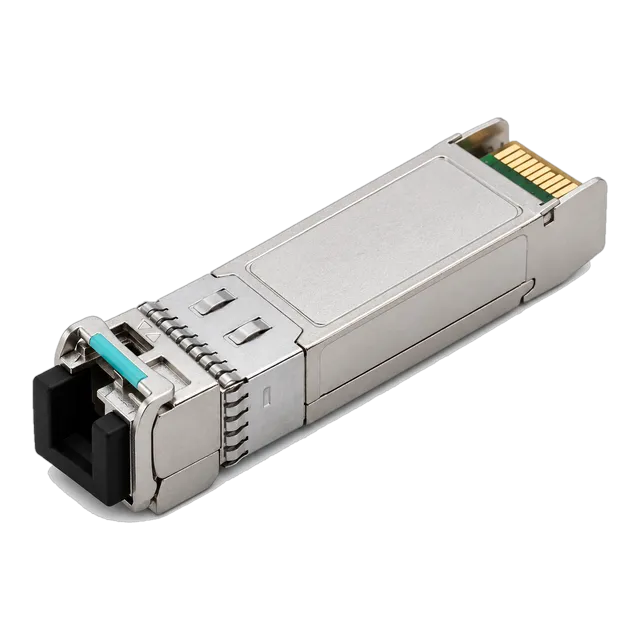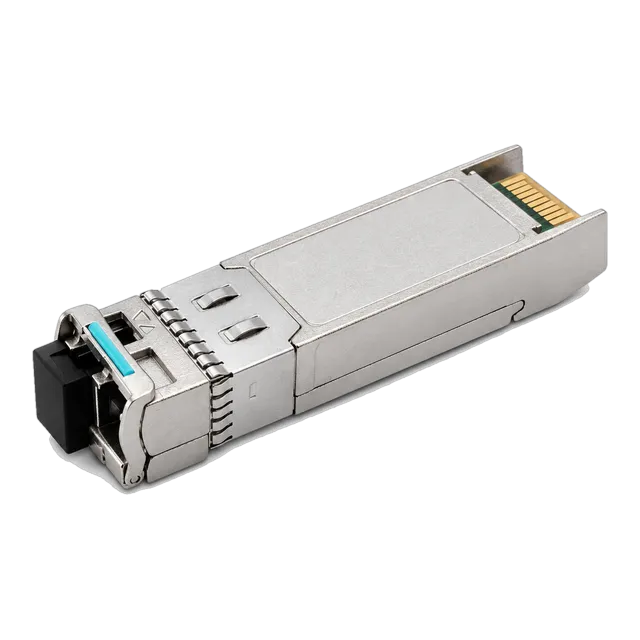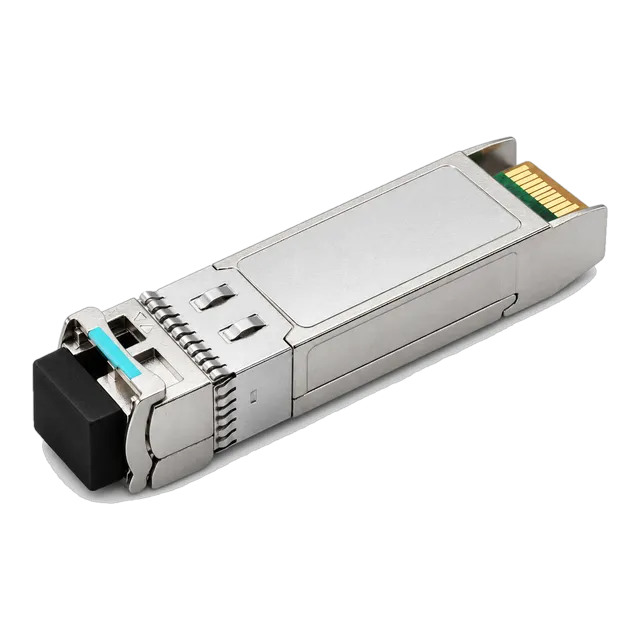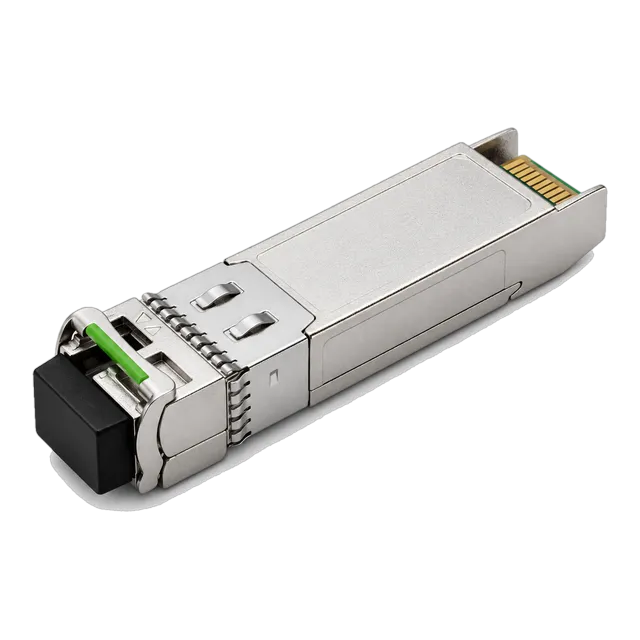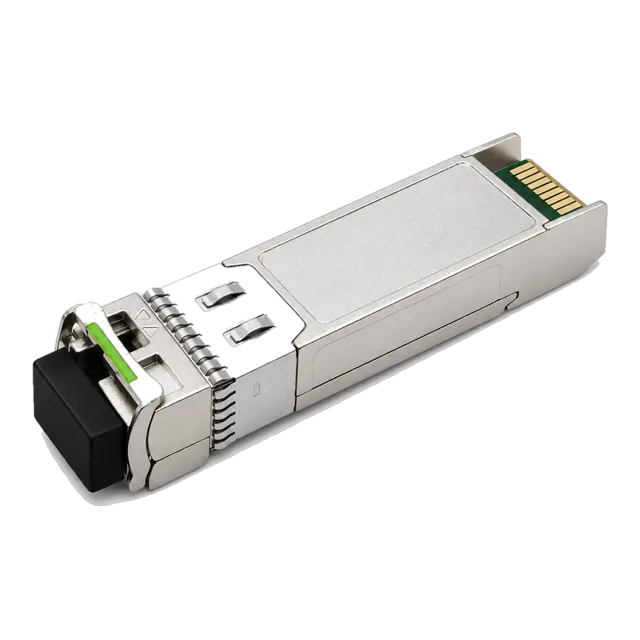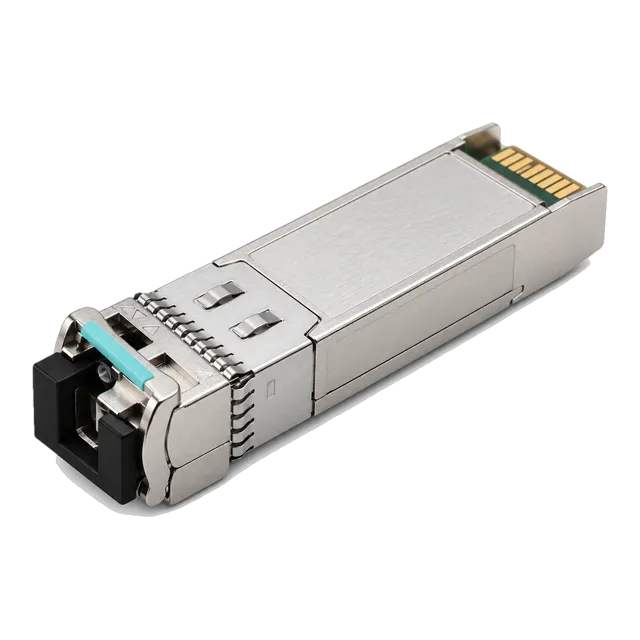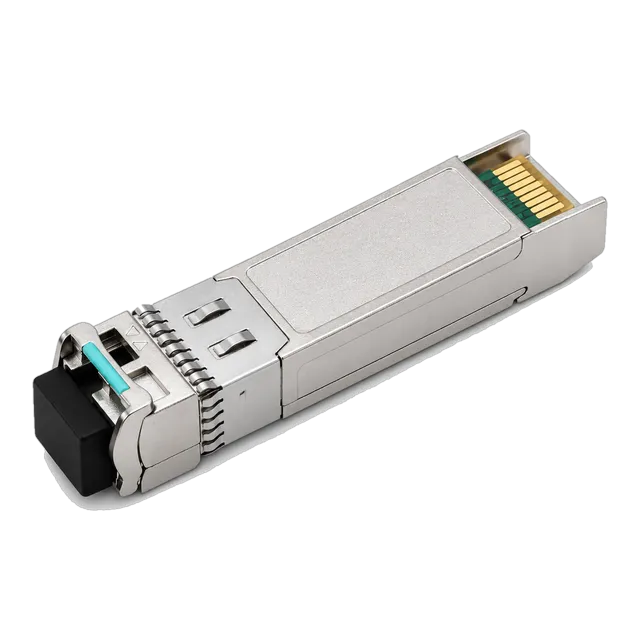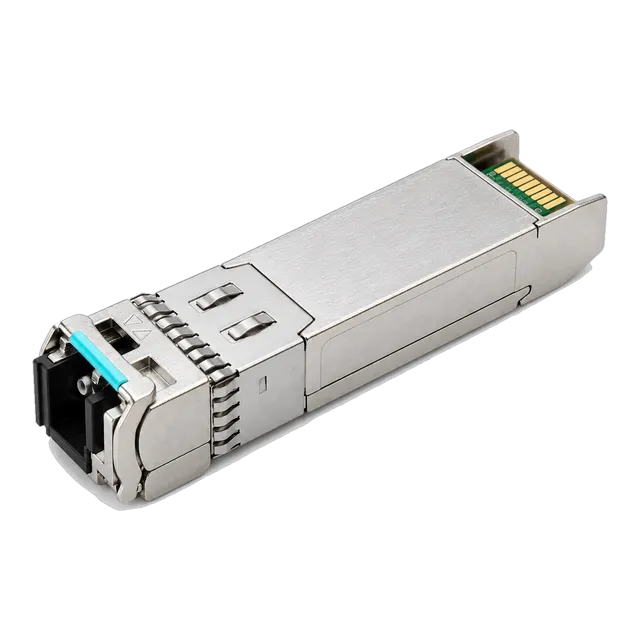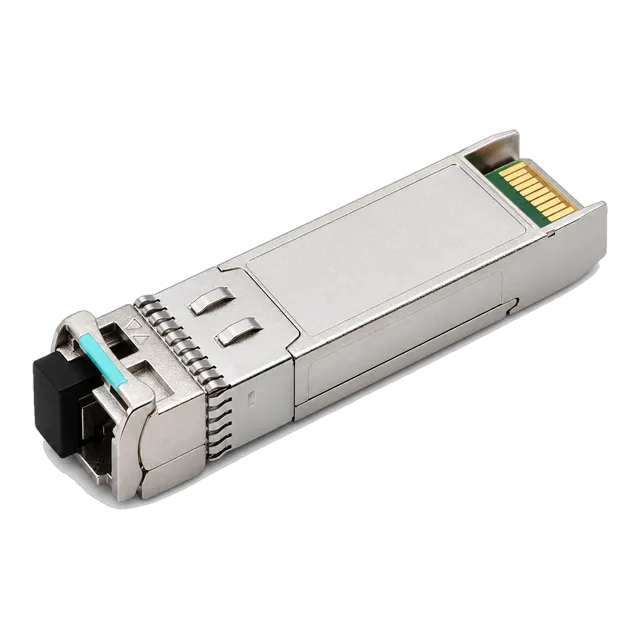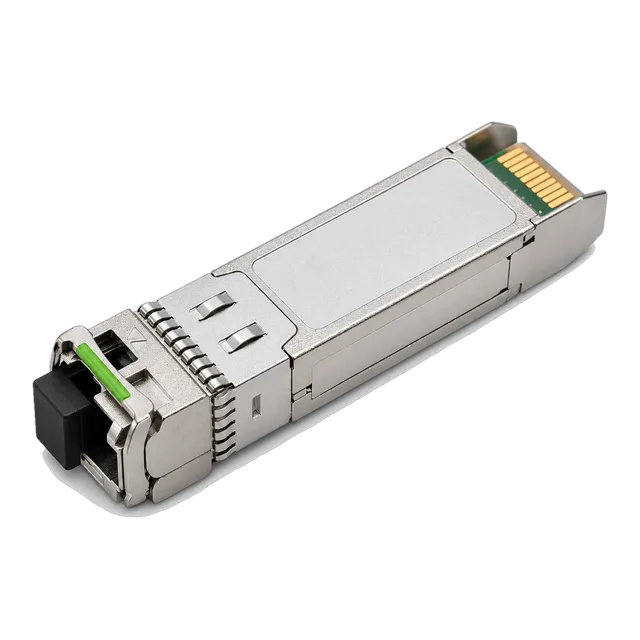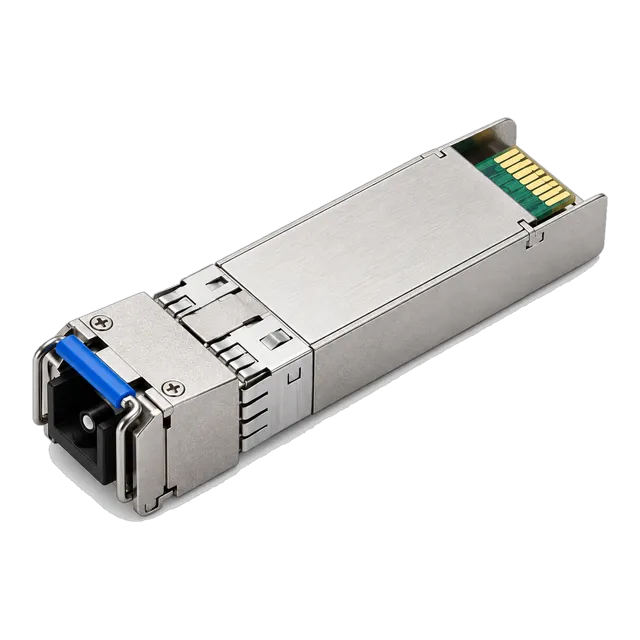
10G SFP+ BiDi BX100 100km 1490/1550nm Simplex LC - Transceiver Module
- Data Rate10 Gb/s
- Wavelength1490nm / 1550nm (single fiber BiDi)
- Transmission Distance100 km


10G SFP+ · 17 models
10G SFP+ transceivers built for single-fiber BiDi links from 20 km to 100 km, plus a 10GBASE-LRM module for 220 m multimode. Specifications and enquiry.
Buying guide
A 10G SFP+ is the pluggable optic used for 10 Gigabit Ethernet on switches, routers and server adapters. It shares the SFP cage dimensions of a Gigabit module, runs from 3.3 V and is hot-pluggable, but carries a 10 Gb/s line rate and therefore needs a host port specified for SFP+ rather than SFP. Every module listed in this category supports digital diagnostics, so optical power, temperature, voltage and bias current can be read from the switch.
The range published here concentrates on two cases. The larger part is single-fiber BiDi optics, which carry both directions on one strand of single-mode fibre using paired wavelengths and a simplex LC interface. These are listed at 20 km on the 1270 and 1330 nm pairing, at 60 km on the same pairing with an extended budget, and at 80 km and 100 km on the 1490 and 1550 nm pairing, where an APD receiver and an EML transmitter are used to hold the longer spans. Several of the longer models are offered in commercial and industrial temperature grades. The second case is a 10GBASE-LRM module at 1310 nm, which reaches 220 m over installed multimode fibre with a duplex LC interface.
Selection therefore starts with the fibre. Where only one strand can be allocated, a BiDi pair is the answer and the reach class follows the measured loss. Where legacy multimode fibre has to carry a 10G link inside a building, LRM is the option. Coding for the host platform is confirmed separately.
Models
Filter the family, then open a model for the full specification table, illustrations and ordering information.
Selection
10G SFP+ variants in this range and the link each one suits.
| Variant | Wavelength | Typical reach | Fiber / media | Where it fits |
|---|---|---|---|---|
| 10GBASE-LRM | 1310 nm | 220 m | Installed multimode, duplex LC | 10G over legacy in-building fibre |
| BiDi BX20 | 1270 / 1330 nm | 20 km | Single-mode single strand, simplex LC | Access and campus on one fibre |
| BiDi BX20 reverse half | Tx 1330 / Rx 1270 nm | 20 km | Single-mode single strand, simplex LC | The matching end of a BX20 link |
| BiDi BX60 | 1270 / 1330 nm | 60 km | Single-mode single strand, simplex LC | Extended metro and transport spans |
| BiDi BX80 | 1490 / 1550 nm | 80 km | Single-mode single strand, simplex LC | Long metro links using an APD receiver |
| BiDi BX100 | 1490 / 1550 nm | 100 km | Single-mode single strand, simplex LC | Carrier backhaul and long-haul access |
| BiDi BX100 industrial grade | 1490 / 1550 nm | 100 km | Single-mode single strand, simplex LC | Cabinets and sites with wide temperature swing |
Listed values describe the published range. Confirm the exact model datasheet, host coding and installed link before ordering.
Before you order
Each BiDi link needs two opposite modules, one transmitting on the shorter wavelength and receiving on the longer one, the other reversed. A shipment of identical units cannot be turned into working links, so both halves of every span must appear on the order and be labelled at each end. Keep spares of both halves at sites that cannot wait for a delivery. The upstream and downstream halves are usually distinguished on the label and by bail latch colour, which makes an audit at the rack straightforward.
The 80 km and 100 km models use an EML transmitter and an APD receiver to hold a high budget, but they still depend on the state of the fibre. Obtain a measured end-to-end loss figure or an OTDR trace for the actual strand, check that the route is standard G.652.D single-mode, and account for every patch frame on the path. At 100 km, chromatic dispersion becomes a factor as well as loss, so a link that passes on loss alone can still need attention. Leave margin rather than ordering to the exact distance.
A 10GBASE-LRM module lets a 10G link run over multimode fibre that was installed for earlier generations, which avoids re-cabling a building. The reach is about 220 m and depends on the modal characteristics of the specific fibre, so results vary between installations. Some links also need mode conditioning patch cords on older fibre. Where the building is due for re-cabling anyway, moving to modern multimode or single-mode plant gives a more predictable result than extending the life of the old fibre.
An SFP+ module fits an SFP cage mechanically, but the port has to be specified for 10 Gb/s. Ports that are Gigabit only will not bring the link up, and some platforms restrict 10G to named ports. Beyond the rate, the switch reads module identification from an EEPROM, and different platforms expect different vendor data, so coding is confirmed against the exact switch model and software release before ordering. Where an estate mixes platforms, the same optical variant may be needed under more than one code.
FAQ
A BiDi module carries transmit and receive on one fibre strand by using two different wavelengths, so a 10G link needs a single strand instead of a pair. It is the usual answer where fibre is leased by the strand, where a duct is full, or where an existing single-strand route has to be upgraded. The modules work only in opposite-wavelength pairs, so both ends have to be ordered together.
The module will fit the cage because SFP and SFP+ share the same mechanical form, but a Gigabit-only port cannot run a 10 Gb/s link. Some platforms allow an SFP+ port to fall back to 1G with a suitable module, which is the reverse case. Check the port specification in the switch documentation and confirm which rates that specific port supports before ordering optics.
In this range the single-fiber BiDi models are specified at 20 km and 60 km on the 1270 and 1330 nm pairing, and at 80 km and 100 km on the 1490 and 1550 nm pairing using an APD receiver. Those figures assume clean G.652.D single-mode fibre. Size against the measured loss of the actual route rather than the map distance, and keep several decibels of margin.
Only where the module will sit outside a temperature-controlled room. Street cabinets, rooftop enclosures, trackside equipment and unconditioned plant rooms see far wider swings than a data hall, and a commercial grade part rated from 0 to 70 degrees Celsius can drift outside its window. Several of the long-reach models here are offered in an industrial grade, so state the installed environment when enquiring.
Related families
Next step
Send the host platform, the fibre you have and the distance you need. We will shortlist the models that actually work and quote them.