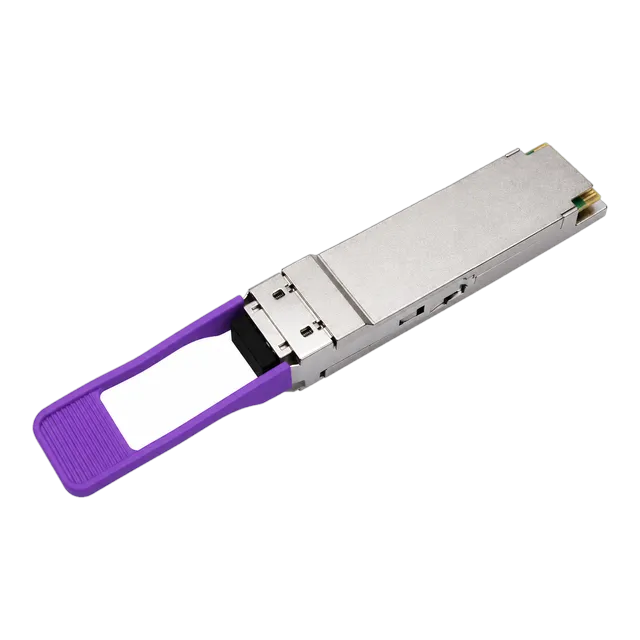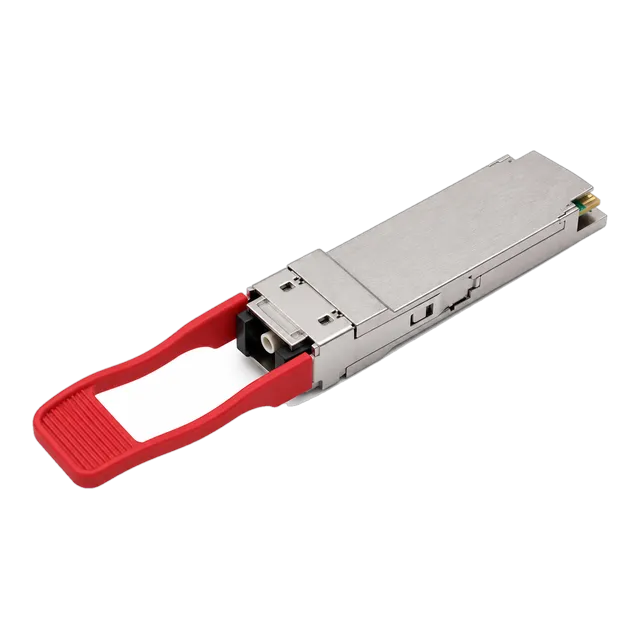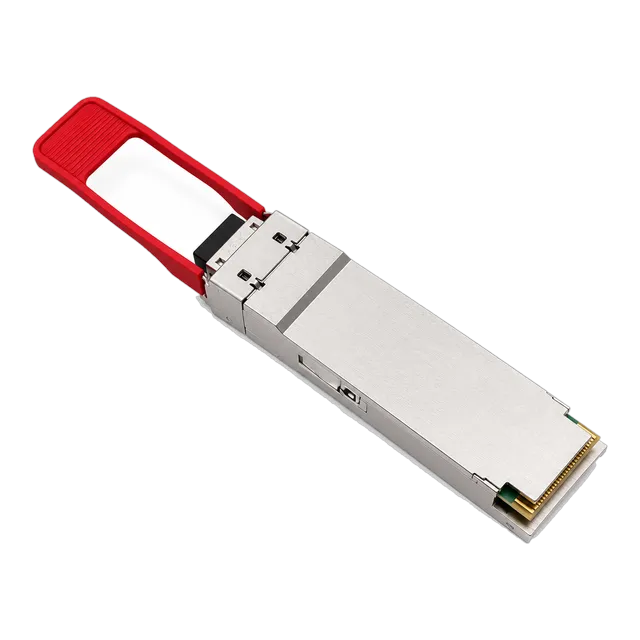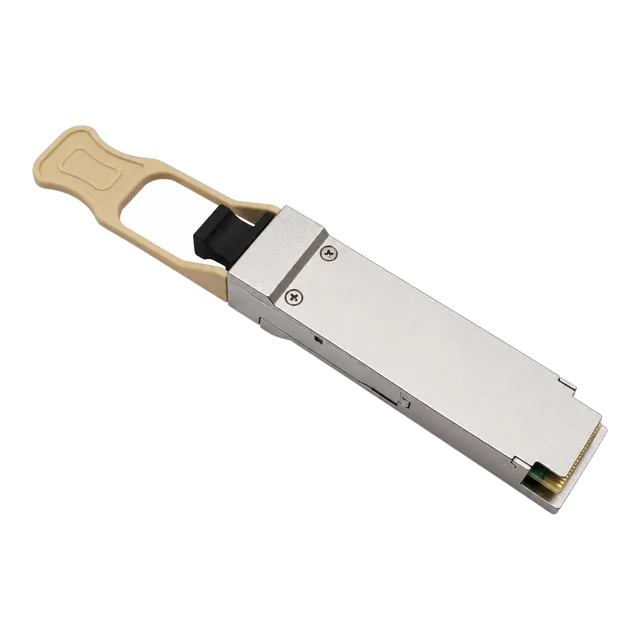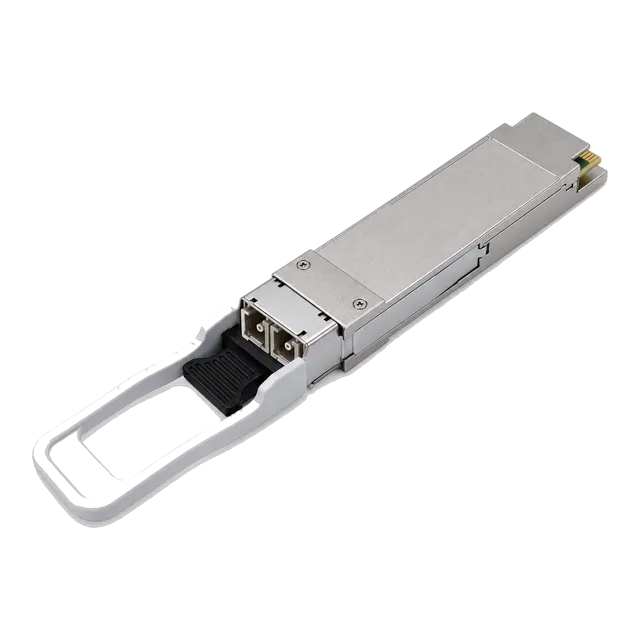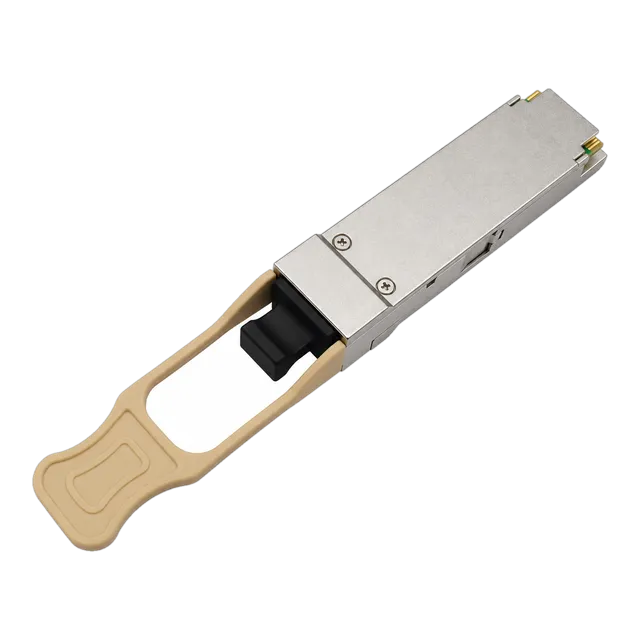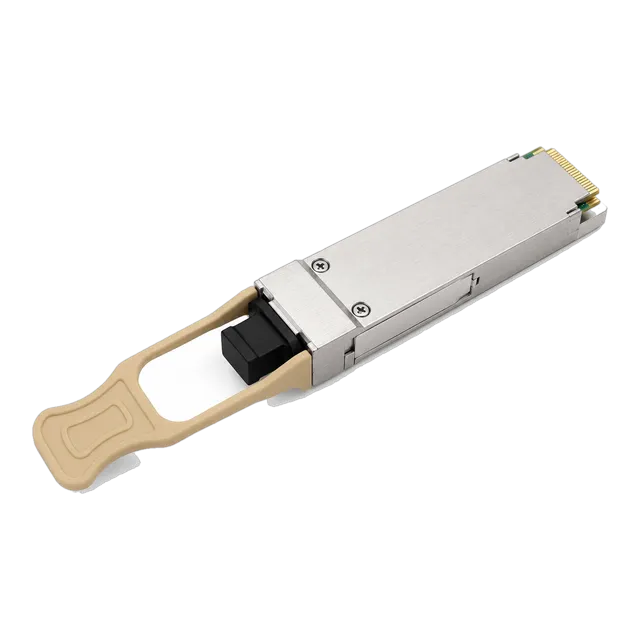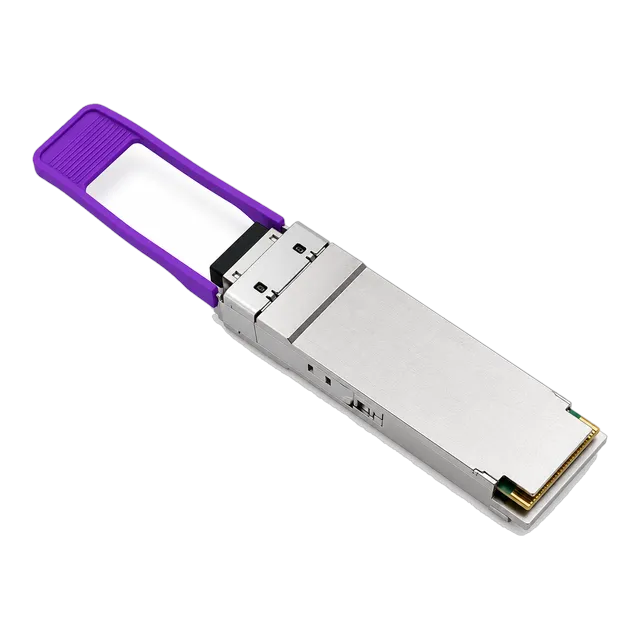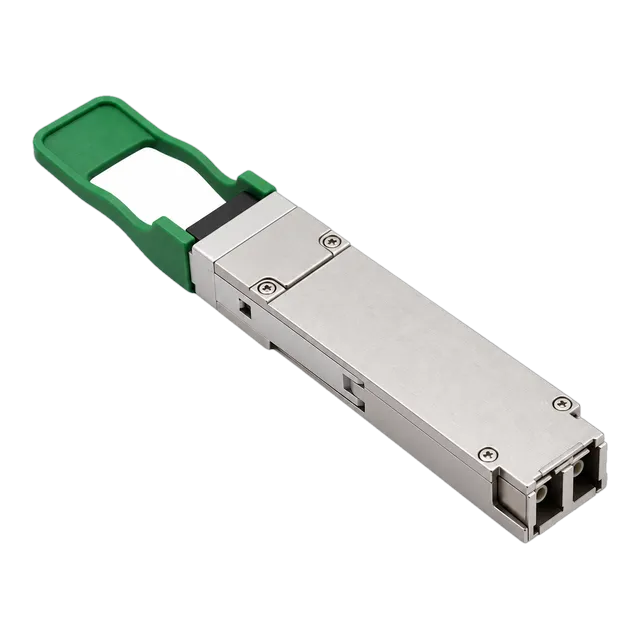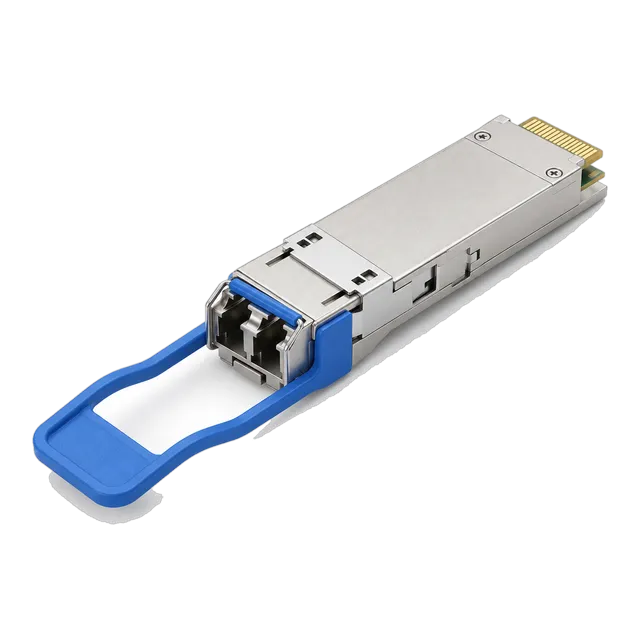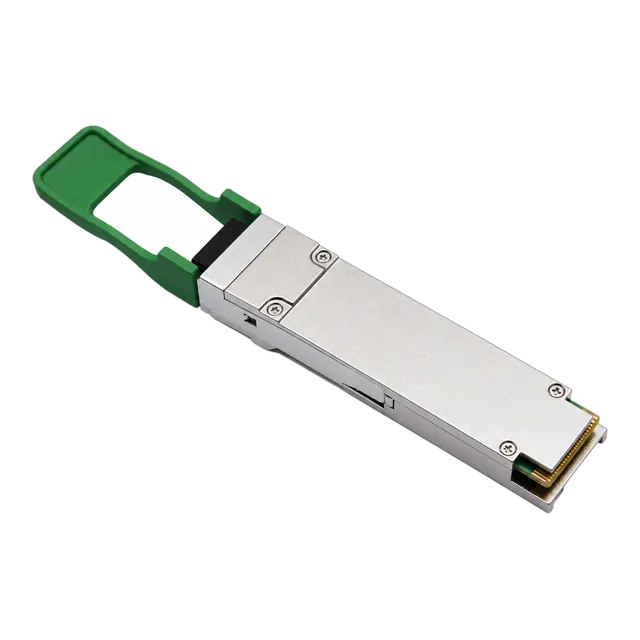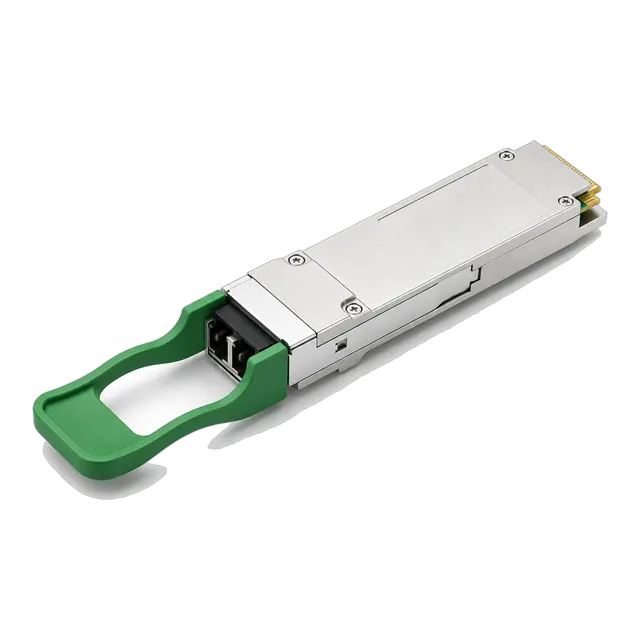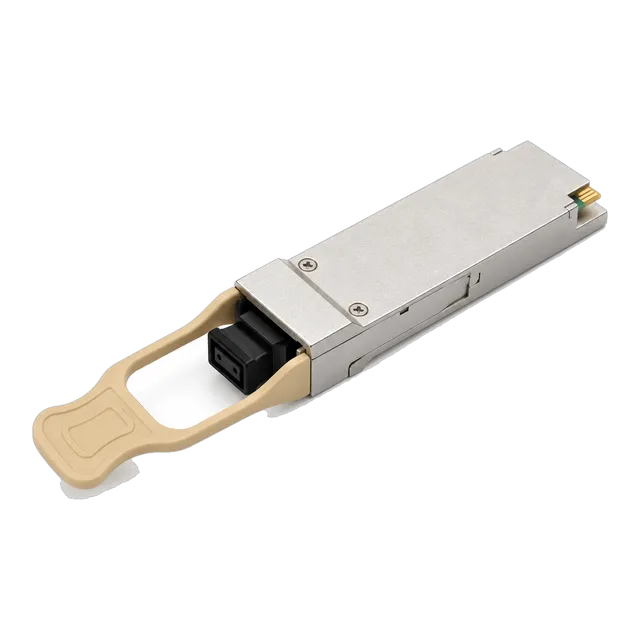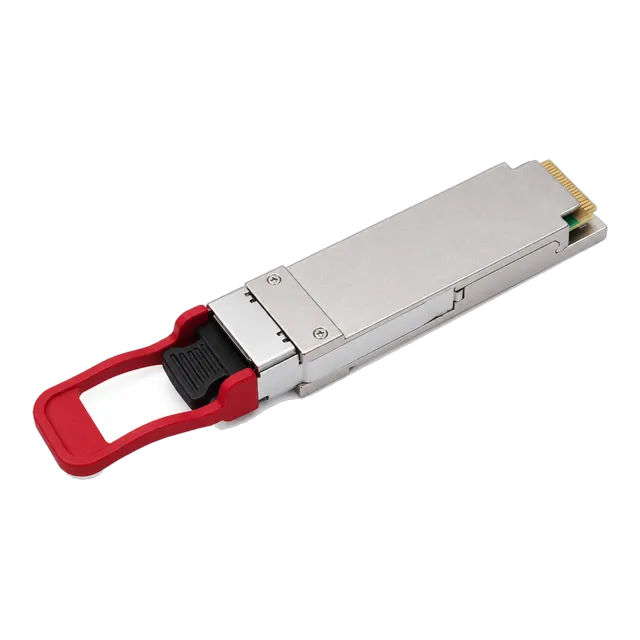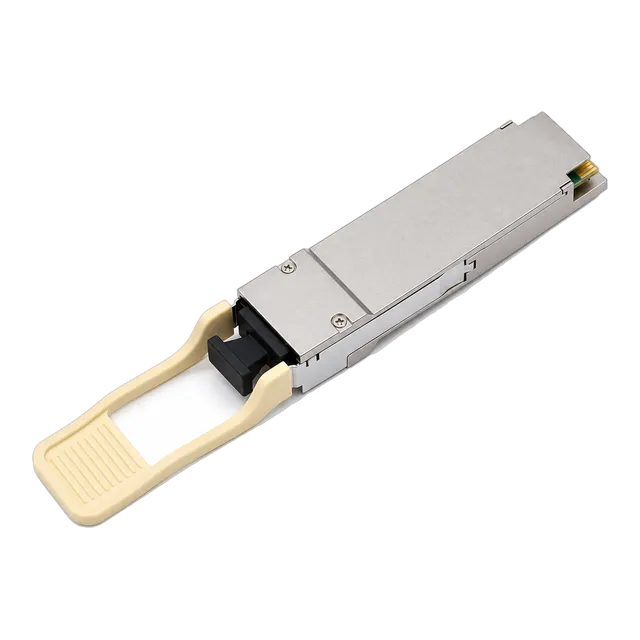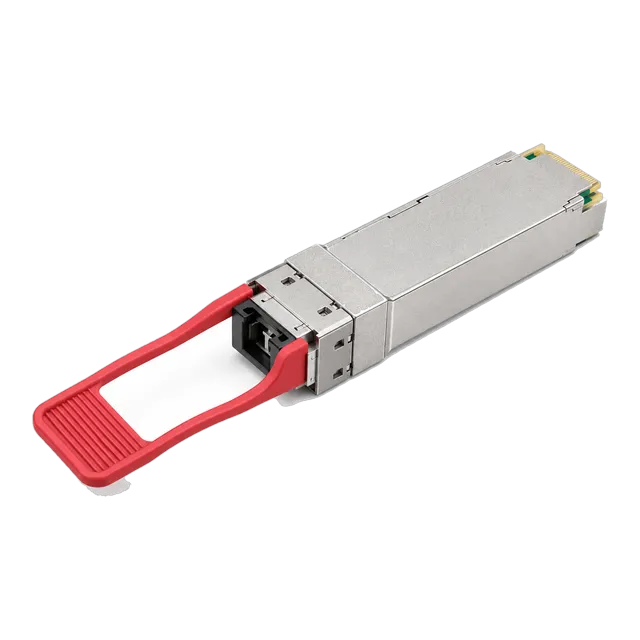
100G BiDi QSFP28 LR1/ER1 10-40km LC Single-Fiber Optical
- Data Rate100 Gb/s
- WavelengthLWDM (single fiber BiDi)
- Transmission Distance10 / 20 / 30 / 40 km (LR1 / ER1)


100G QSFP28 · 17 models
100G QSFP28 transceivers covering 100GBASE-SR4 at 100 m, CWDM4 at 2 to 10 km, LR4 at 10 km, single-fiber BiDi and a 100 km eZR4 build. Enquire for details.
Buying guide
A 100G QSFP28 carries four lanes of 25 Gb/s in the QSFP form factor, which is why it became the standard uplink optic for leaf and spine data centre designs. The module runs from 3.3 V, is hot-pluggable, follows the QSFP28 MSA and the SFF-8636 management interface, and supports digital diagnostics so optical power and temperature can be read per module from the switch.
The range covers the reach ladder in full. Inside a data hall, 100GBASE-SR4 uses 850 nm VCSELs across an MPO twelve-fibre interface and is specified at 100 m on OM4 multimode. For links that need single-mode fibre but not full LR reach, CWDM4 builds multiplex four wavelengths between 1270 and 1330 nm onto one fibre pair with a duplex LC connector, listed at 2 km in the CWDM4-S build and from 2 km to 10 km in the standard build. 100GBASE-LR4 uses the 1310 nm LWDM grid for 10 km. Single-fiber BiDi models carry 100G on one strand with a simplex LC interface, listed at 10 km in the 100GBASE-BX10 build on a 1271 and 1331 nm pairing, and in longer LR1, ER1 and ZR1 builds at 20, 40 and 80 km. An eZR4 build with an integrated optical amplifier extends the range to 100 km.
Selection follows the cabling, the measured loss and the number of strands available, then the coding required by the host platform.
Models
Filter the family, then open a model for the full specification table, illustrations and ordering information.
Selection
100G QSFP28 variants in this range and the link each one suits.
| Variant | Wavelength | Typical reach | Fiber / media | Where it fits |
|---|---|---|---|---|
| 100GBASE-SR4 | 850 nm, four lanes | 100 m on OM4 | MPO / MTP-12 multimode | Leaf to spine inside a data hall |
| 100GBASE-CWDM4-S | 1270-1330 nm | 2 km | G.652.D single-mode, duplex LC | Hall to hall on a single-mode plant |
| 100GBASE-CWDM4 | 1270-1330 nm | 2 to 10 km | G.652.D single-mode, duplex LC | Campus links and short interconnect |
| 100GBASE-LR4 | 1310 nm LWDM4 | 10 km | G.652.D single-mode, duplex LC | Site to site and metro access |
| 100GBASE-BX10 BiDi | 1271 / 1331 nm | 10 km | Single-mode single strand, simplex LC | Single-fiber routes and access links |
| 100G BiDi LR1, ER1 and ZR1 | LWDM single fiber | 20, 40 and 80 km | Single-mode single strand, simplex LC | Metro spans where strands are scarce |
| 100G eZR4 | LWDM4 with integrated SOA | 100 km | G.652.D single-mode, duplex LC | Long-haul data centre interconnect |
Listed values describe the published range. Confirm the exact model datasheet, host coding and installed link before ordering.
Before you order
Both multiplex four wavelengths onto one fibre pair and both use a duplex LC connector, so they look identical at the patch panel. CWDM4 uses a wider wavelength spacing and a smaller budget, which is why it is listed at 2 km and up to 10 km, while LR4 uses the LWDM grid and carries a full 10 km with more margin. For links inside a campus, CWDM4 is usually the more economical build. For routes at or near 10 km, or where the fibre plant is old, LR4 is the safer choice.
QSFP28 optics differ widely in consumption. An SR4 module is modest, while amplified long-reach builds draw considerably more and run hot. Switches publish a power class limit per port and sometimes a total per line card, and exceeding it produces intermittent faults rather than a clean refusal. Check the platform limits before populating every port with long-reach optics, make sure the airflow direction of the chassis matches the installation, and keep blanking panels in place so cooling is not short circuited.
An SR4 link depends on twelve fibre positions in one ferrule staying aligned through trunks, cassettes and jumpers. Polarity method has to be consistent across the whole channel and gender has to match at every mating point, otherwise the link simply does not come up. MPO end faces also collect contamination more readily than LC and a single dirty position disables a lane, so inspect and clean each ferrule before insertion and keep dust caps on until the moment of connection.
The BiDi builds carry 100G on one strand using paired wavelengths, which is valuable where fibre is leased by the strand or where a duct is full. As with all single-fiber optics they work only in opposite pairs, so both halves of each link must be ordered together, labelled at each end and stocked as spares in both halves. The longer ER1 and ZR1 builds also need a measured loss figure for the strand before the reach class is fixed.
FAQ
Both carry four multiplexed wavelengths on a single-mode fibre pair with a duplex LC connector. CWDM4 uses wider wavelength spacing and a smaller optical budget, and is listed here at 2 km and up to 10 km. LR4 uses the LWDM grid in the 1310 nm region with more margin for a full 10 km. CWDM4 is usually chosen for campus and hall-to-hall links, LR4 for longer or older routes.
The SR4 modules here are specified at 100 m, which assumes OM4 multimode fibre and an MPO twelve-fibre channel. OM3 gives a shorter usable distance, and older OM1 and OM2 plant is not suitable for 100G. Every cassette and connector pair in the channel consumes part of the budget, so long cross-hall routes should be measured and not estimated from the floor plan.
Yes, using the single-fiber BiDi builds. These carry both directions on one strand with paired wavelengths and a simplex LC connector, and are listed at 10 km in the BX10 build and at 20, 40 and 80 km in the longer builds. The modules work only as opposite-wavelength pairs, so order both halves of each link together and stock spares of each half.
The cage is mechanically the same, and some 40G ports will accept a QSFP28 module, but the port has to support 100 Gb/s for the link to run at that rate. Whether a given port supports 40G, 100G or both is set by the switch hardware and its software release. Check the port specification before ordering, and confirm the coding the platform expects from the module EEPROM.
Related families
Next step
Send the host platform, the fibre you have and the distance you need. We will shortlist the models that actually work and quote them.