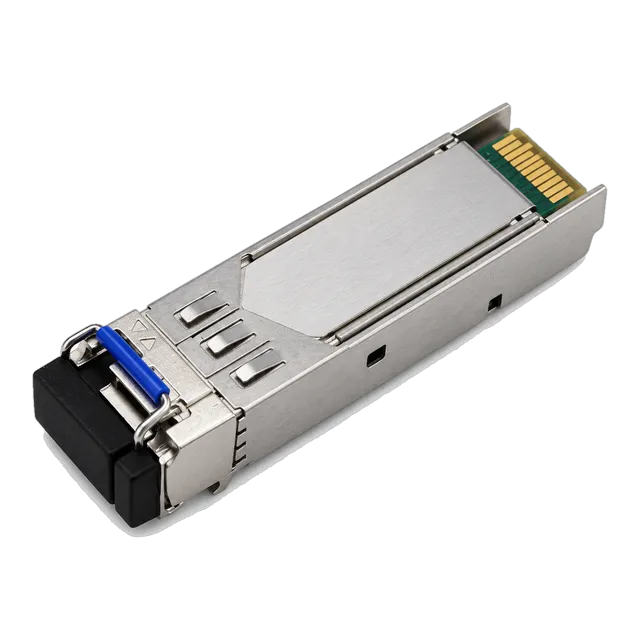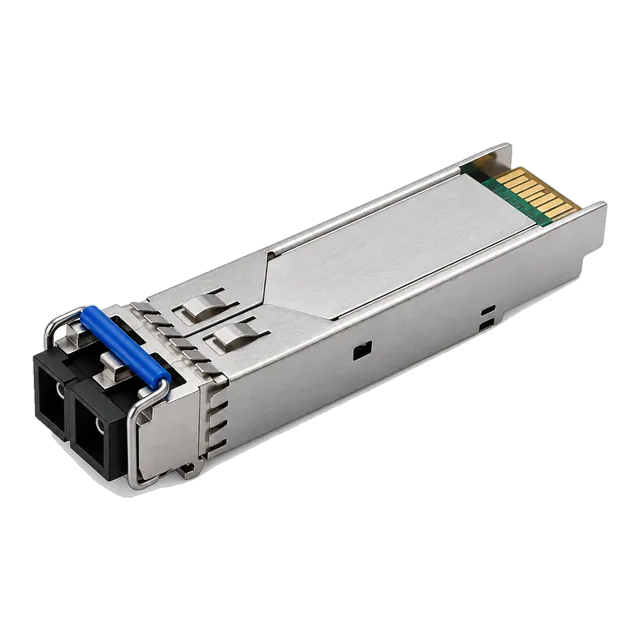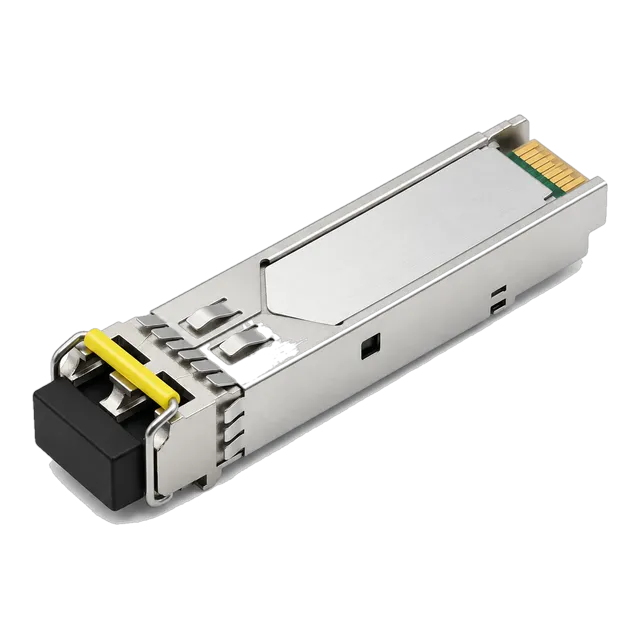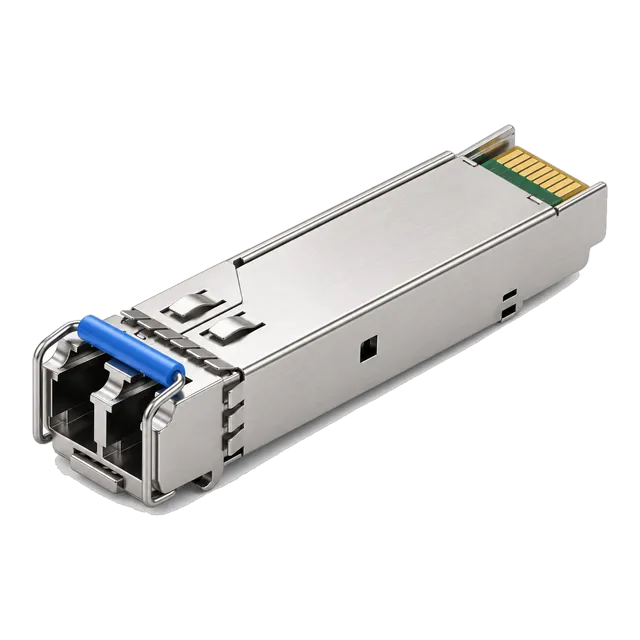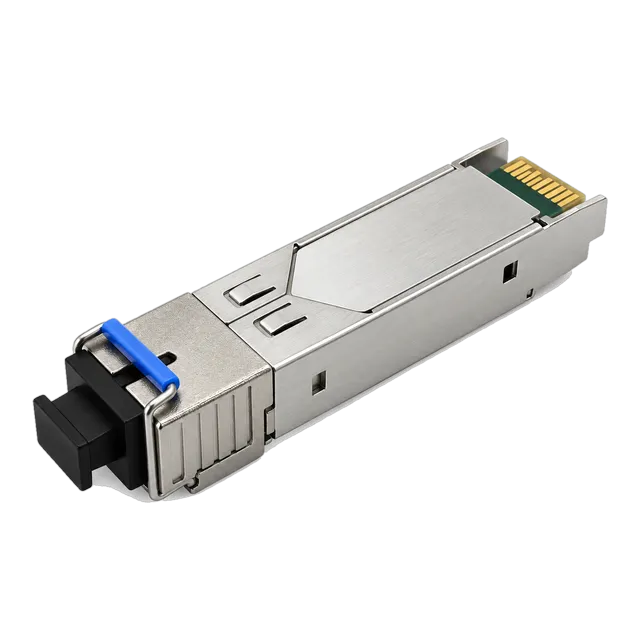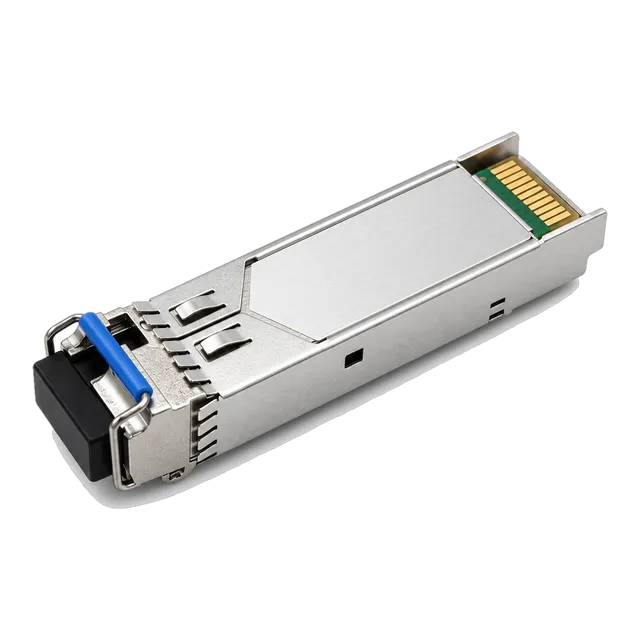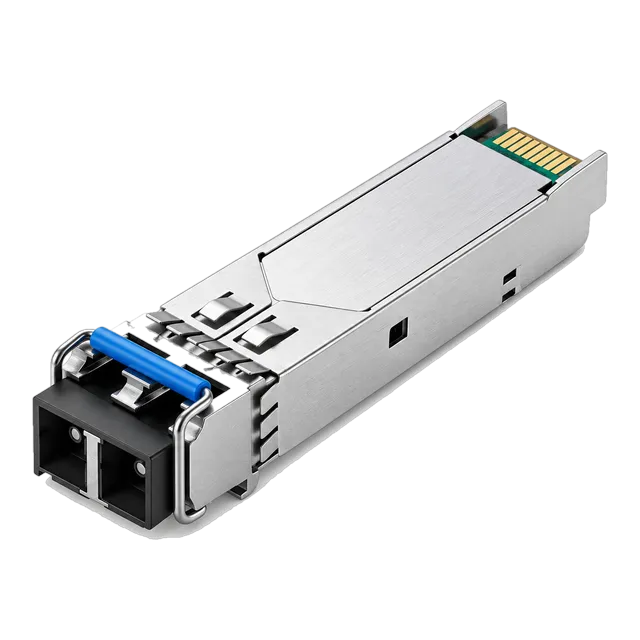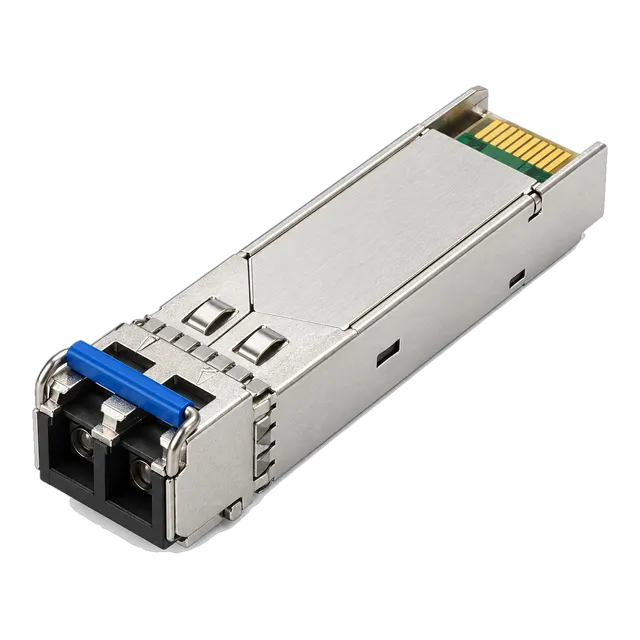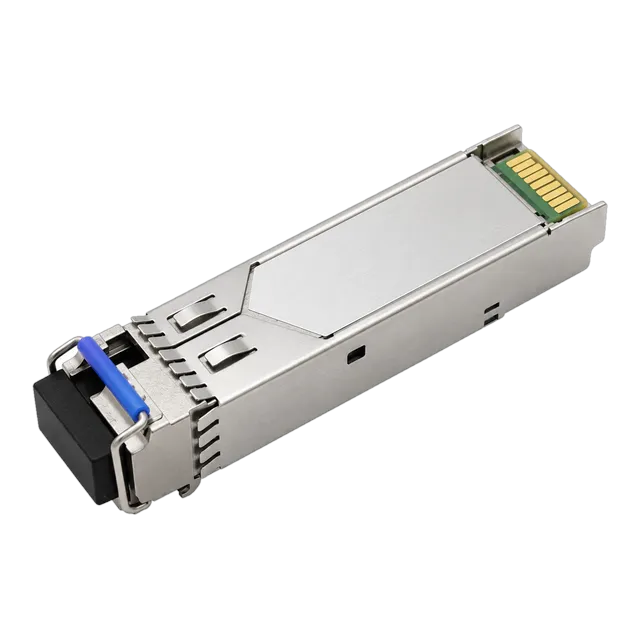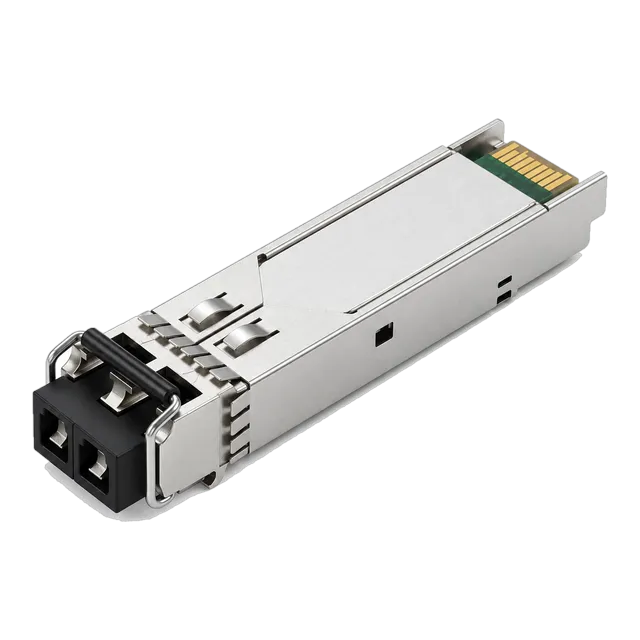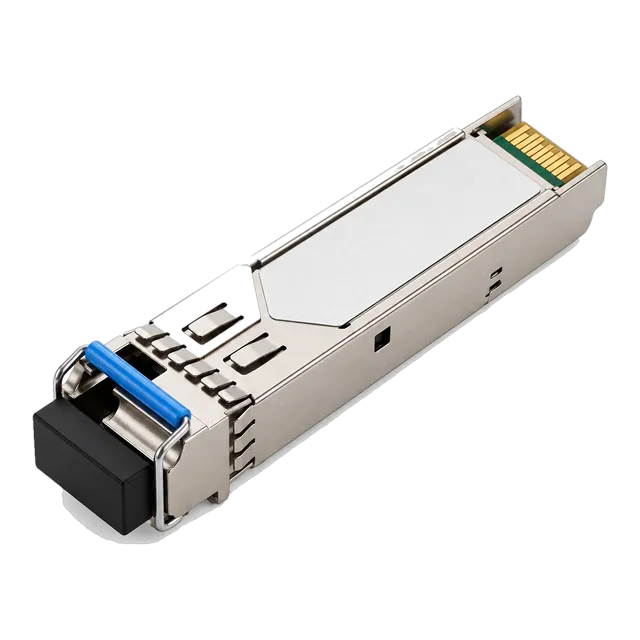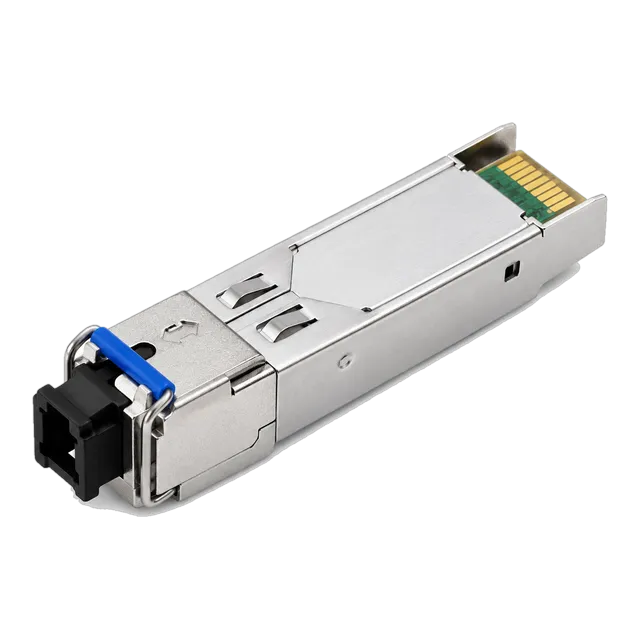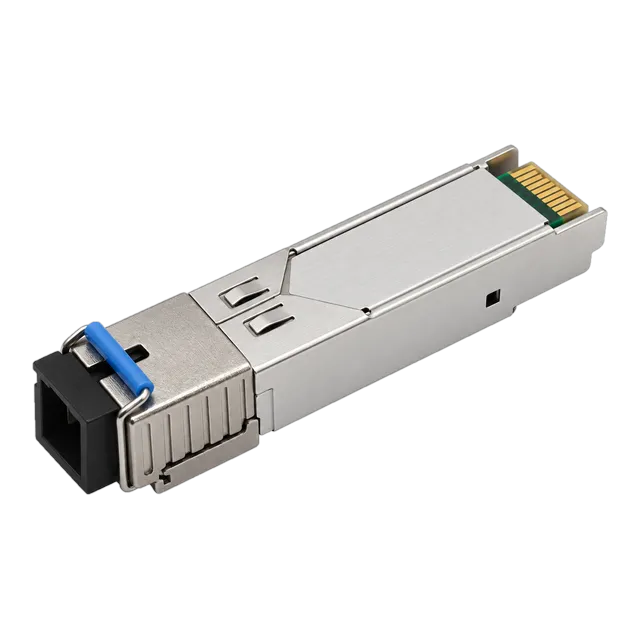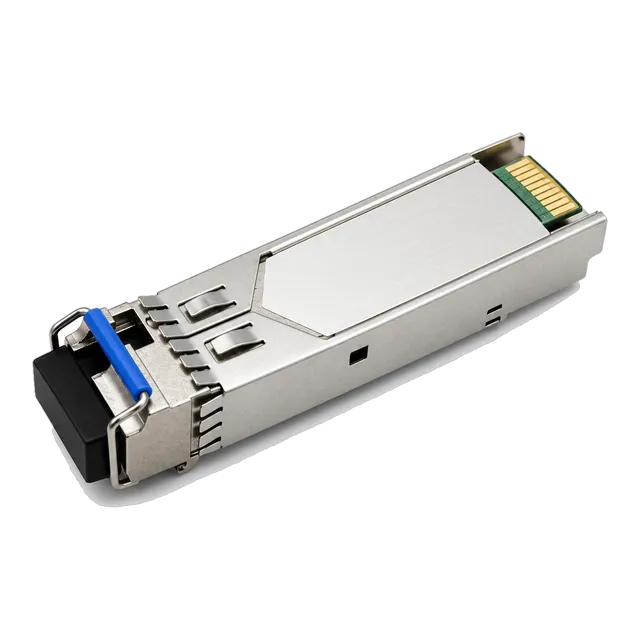
1.25G BiDi Single-Fiber SFP Transceiver 1310nm/1550nm 20km
- Data Rate1.25 Gb/s
- Wavelength1310nm / 1550nm (WDM, single fiber BiDi)
- Transmission Distance20 km (series 3–120 km)


1.25G SFP · 16 models
Gigabit 1.25G SFP transceivers from 550 m multimode to 120 km single-mode, including duplex LC and single-fiber BiDi models with DDM. Compare and enquire.
Buying guide
A 1.25G SFP is the standard pluggable optic for Gigabit Ethernet. It fits any SFP cage built to the MSA mechanical and electrical definition, runs from a 3.3 V supply, is hot-pluggable, and reports transmit power, receive power, temperature, voltage and bias current through digital diagnostics so a link can be checked without a power meter. The modules in this category all carry 1.25 Gb/s line rate and are used for switch uplinks, campus backbones, FTTx and access aggregation, IP surveillance runs and fibre media converters.
What separates one model from another is the optical budget, and that follows from wavelength and fibre type. Short in-building links use an 850 nm multimode module over OM2 or OM3 fibre. Anything that leaves the building moves to single-mode: 1310 nm covers 10 km, 20 km and 40 km spans, and 1550 nm is used where the link runs to 80 km or beyond. The range published here reaches from 550 m up to 120 km depending on the variant selected.
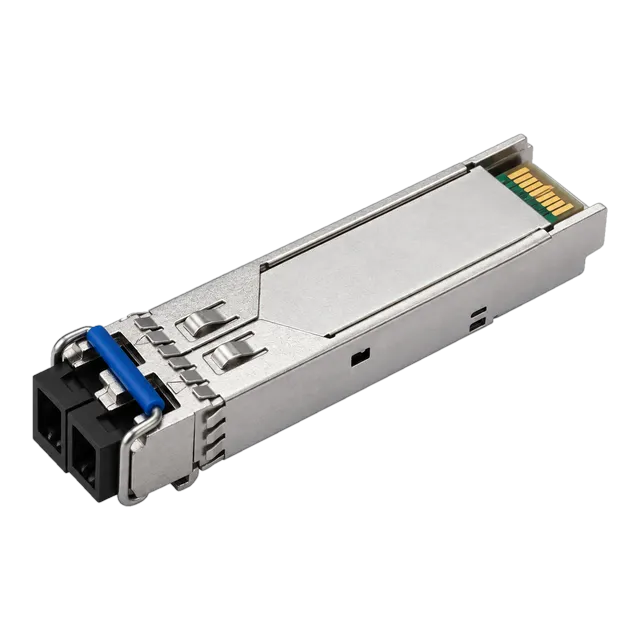
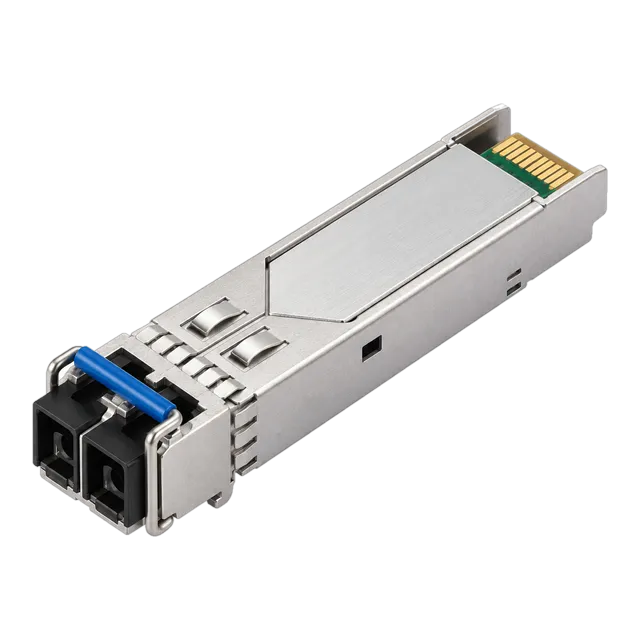
The second decision is how many fibre strands are available. Duplex models use two strands with a duplex LC connector. Single-fiber BiDi models carry both directions on one strand using paired wavelengths, and are supplied as matched upstream and downstream units with a simplex LC or simplex SC interface. Coding for the host switch platform is the last item to confirm before ordering.
Models
Filter the family, then open a model for the full specification table, illustrations and ordering information.
Selection
Gigabit SFP variants in this range and the link each one suits.
| Variant | Wavelength | Typical reach | Fiber / media | Where it fits |
|---|---|---|---|---|
| 1000BASE-SX | 850 nm | 550 m | OM2 / OM3 multimode, duplex LC | In-building and floor-to-floor links |
| 1000BASE-LX | 1310 nm | 10 km | G.652.D single-mode, duplex LC | Building-to-building and access rings |
| 1000BASE-LX extended | 1310 nm | 20 km | G.652.D single-mode, duplex LC | Campus and metro access spans |
| 1000BASE-EX | 1310 nm | 40 km | G.652.D single-mode, duplex LC | Metro aggregation and backhaul |
| 1000BASE-ZX | 1550 nm | 80 km | G.652.D single-mode, duplex LC | Long metro and inter-city spans |
| BiDi BX short | Tx 1310 / Rx 1490 nm | 3 km | Single-mode, simplex LC | Short single-fiber drops and FTTx |
| BiDi BX20 | 1310 / 1550 nm | 20 km | Single-mode, simplex LC or SC | Access networks with one spare strand |
| BiDi BX60 | 1310 / 1490 nm | 60 km | Single-mode, simplex LC | Long single-fiber backhaul |
Listed values describe the published range. Confirm the exact model datasheet, host coding and installed link before ordering.
Before you order
The distance printed on a datasheet assumes a clean fibre plant. Every patch panel, splice and connector pair removes part of the budget, so a 20 km module on a 19 km route with six connector pairs can run short. Work out the loss of the real path from the fibre attenuation plus the connector and splice count, compare it with the difference between transmit power and receiver sensitivity, and keep a few decibels in reserve. Where the calculation is marginal, moving up one reach class is cheaper than returning to site.
A BiDi link only works when the two ends use opposite wavelength assignments. One end transmits at 1310 nm and receives at 1550 nm, the other does the reverse, and the modules are colour coded on the bail latch so the pairing is visible at the rack. Order both halves of every link together and record which end is which, because a box of identical halves cannot be turned into working links. The same rule applies to the 1310/1490 nm pairings used on the longer models.
Long-reach optics are built with high launch power, and putting an 80 km module on a 200 m patch inside the same room can drive the receiver past its maximum input level. The symptom is a link that shows errors or flaps rather than one that fails cleanly. Either fit a module rated for the actual span or insert a fixed optical attenuator sized to bring received power back inside the specified window. Digital diagnostics make this easy to verify once the module is in the port.
SFP optics carry an EEPROM that the host switch reads to identify the module. Different switch platforms expect different vendor strings and some reject anything they do not recognise, so coding has to be confirmed against the exact platform and software release in use before an order is placed. Mixed estates often need the same optical variant supplied under more than one code. Tell the supplier the switch model and the port type, and confirm whether the platform needs to be told to accept third-party optics.
FAQ
Both run at 1310 nm over single-mode fibre with a duplex LC interface, so the optical interface is the same. The difference is budget. An LX module is specified for spans in the 10 to 20 km range, while an EX module uses a stronger transmitter and a more sensitive receiver to reach around 40 km. If the measured loss on your route sits close to the LX limit, the EX variant is the safer choice.
Not usually. Gigabit optics are designed around a 1.25 Gb/s line rate and most will not lock at 155 Mbps, so a Fast Ethernet port needs a 155M module instead. Some switch platforms can force a fibre port to 100 Mbps, but that setting controls the port, not the optics. Where a link has to serve both rates, confirm the module is specified as dual rate before relying on it.
It is decided by the fibre already installed. An 850 nm module only works over multimode fibre and covers around 550 m at Gigabit rates, which suits links inside one building. Everything longer runs on single-mode fibre at 1310 nm or 1550 nm. The two fibre types cannot be mixed within a link, so check the fibre records or the patch panel labelling before choosing a wavelength.
Every module in this range supports digital diagnostics, so the switch can display transmit power, receive power, module temperature, supply voltage and laser bias current. Compare received power with the sensitivity figure on the datasheet: a healthy link sits comfortably above it and well below the overload point. A receive level that drifts downward over months usually points at a dirty or damaged connector rather than at the optics.
Related families
Next step
Send the host platform, the fibre you have and the distance you need. We will shortlist the models that actually work and quote them.