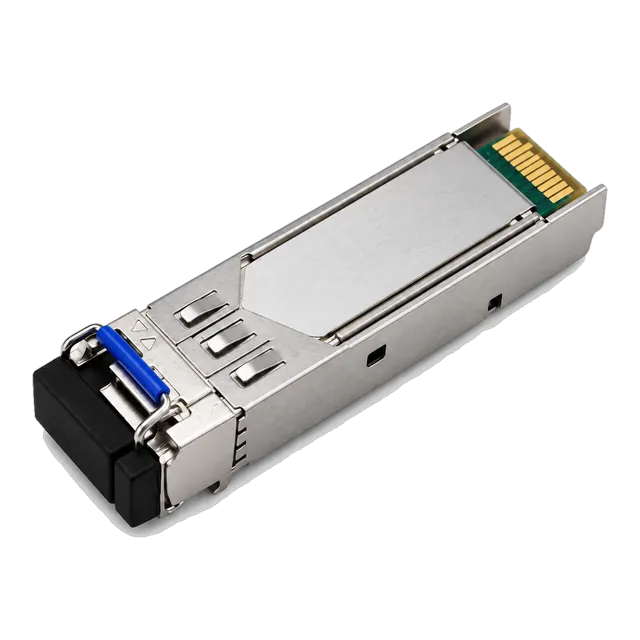

Ask for model-specific documentation before the order, not after a problem: datasheet, coding declaration, compliance statements, traceability and change notification.
01Documentation is a procurement control
In optical networking the physical product is small, visually indistinguishable between variants and largely defined by data the buyer cannot see. A 10 kilometre and a 40 kilometre module of the same family look identical in the hand; so do a commercial and an industrial grade unit, and so do two modules coded for different platforms. Documentation is therefore not administrative overhead but the mechanism by which a buyer establishes what is being purchased and verifies what arrived. Requesting it before the order, when the supplier is quoting and has every incentive to be specific, is far more effective than requesting it after a delivery has been questioned. Decide which documents your organisation actually needs, list them in the request, and treat the response as part of the evaluation rather than as a formality attached to the price.
02The model-specific datasheet
Ask for the datasheet covering the exact model being quoted rather than a family overview. Product families routinely span several reaches, wavelength plans, connector types and temperature grades, so a family page cannot tell you which parameters apply to the item on the invoice. Our catalog reflects this pattern: entries such as the 25G SFP28 Optical Transceiver Module series and the 40G QSFP+ Optical Transceivers SR4 / LR4 / PSM4 / ER4 listing cover multiple variants under one heading, and listed reach and specifications must be confirmed per model. The datasheet you want names the model, states its standards designation, and gives the optical, electrical, mechanical and environmental parameters for that variant alone. If only a family document is available, ask for written confirmation of the specific values for the quoted item.
03Optical parameters worth reading closely
Within the datasheet, a handful of figures determine whether the module suits the link. Minimum and maximum transmit optical power set the top of the budget and the risk of overloading a near receiver. Worst-case receiver sensitivity sets the bottom, and receiver overload sets the practical minimum loss. Operating wavelength range matters for wavelength division plans and for single-fiber BiDi pairings, where the filter passband must accommodate the partner's transmit tolerance. Extinction ratio, dispersion tolerance and, for parallel or multi-wavelength modules, per-lane figures are also relevant on longer or more demanding links. Read these as worst-case values rather than typical ones when designing, and note which are specified over the full temperature range and which only at an ambient reference point.
04Electrical, mechanical and environmental sections
Beyond the optics, confirm the supply voltage and maximum power consumption, since power affects both platform compatibility and faceplate heat. Confirm the form factor and that the module conforms to the relevant multi-source agreement, and confirm the connector type and orientation. Confirm the operating case temperature range and which grade the quoted item is, commercial at 0 to 70 degrees Celsius or industrial at minus 40 to 85 degrees Celsius, and confirm the storage temperature and humidity range if the goods will be warehoused in uncontrolled conditions. Confirm whether digital diagnostics are supported and to which specification, and whether they are internally or externally calibrated, since that affects how the host presents the values and how a reading should be interpreted.
05The coding declaration
For every line of the order, ask for written confirmation of the coding applied: the host platform family it is intended for, and the identification data the module will present, including vendor name, part number and revision fields. Where a sample has been tested, ask for confirmation that the production build will reproduce the identification output recorded in that test. This document is the one that most often prevents a dispute, because coding is invisible until a module is inserted and a mismatch is discovered at the worst possible moment. Note that a coding declaration is a statement about what the module presents, not a claim of approval by the host manufacturer; no component supplier can represent another company's certification programme, and a request should not ask for one.
06Compliance declarations for your market
Ask which compliance declarations accompany the product and request copies. The ones commonly relevant to network hardware in international trade are RoHS, concerning restricted hazardous substances, REACH, concerning substances of very high concern in the European market, and CE marking where the goods are placed on the European market. Laser products also fall under eye safety classification, and the datasheet should state the class. Which of these your organisation needs depends on where the goods will be used and on your own obligations as an importer or installer, so establish the list internally before writing the request. Ask for the declarations in the name of the product actually being supplied, and check that the model numbers on the declaration match those on the quotation.
07Test and inspection records
Ask what testing is performed on the product and what record, if any, travels with a shipment. Suppliers differ considerably in what they provide, so the useful step is to ask the question specifically rather than to assume a standard. Where a test record is available, establish whether it is per unit, per lot or a type test performed once on the design, since those carry very different weight. Where nothing is provided, that is itself useful information and shifts weight onto your own incoming inspection. Either way, define your receiving test before the first delivery, so that a sample from each batch is checked against the datasheet and the result is recorded against the batch reference rather than being a matter of recollection.
08Traceability and identification
Ask how individual units can be traced. A serial number on each module, readable both on the label and through the host's module identification output, is the minimum useful level and is what allows a warranty claim, a fault investigation or a recall to be scoped. Ask whether a date code or lot code is applied and where it appears. Ask whether the batch reference will be recorded on the packing documentation, so that a delivery can be linked to a production run. This matters most when a problem appears months after installation: without traceability the only available action is to treat every unit of that type as suspect, whereas with it the investigation can be narrowed to a single shipment.
09Packaging and labelling specification
Agree in writing what arrives and how it is marked. State whether modules should be individually bagged and boxed, whether a customer part number or internal stock code should appear on the label, whether neutral packaging is required, and how the outer cartons should be marked for the destination. Several items in our catalog list neutral or custom export packaging among the available options, but the specific arrangement belongs in the quotation rather than being assumed from a catalog page. Include the label content in the agreement, since a module that arrives correctly built but labelled in a way your stores system cannot process still creates work. For single-fiber BiDi modules, specify that the two wavelength variants are packaged and labelled separately.
10Change notification
The most valuable document in a long-running supply relationship is notice that something has changed. Ask the supplier to notify you in advance of changes to the internal build, the firmware or the coding of a product you order repeatedly, and agree what constitutes a change worth reporting. Agree this before the first production order, because it is a commitment about future behaviour and is much harder to obtain after an incident. Pair it with your own control: a register recording which build was validated against which host platform and software version, and a short receiving test on each batch. Between them, these two measures address the most common cause of optics problems reaching operations, which is an untested change arriving inside a familiar part number.
11Warranty and return process
Warranty terms vary by product, and our catalog listings show different periods across item types, so the duration should be confirmed in the quotation for each line rather than taken from a general statement. More important than duration is the process. Ask who raises a case and how, what evidence is expected with a claim such as diagnostic output and interface counters, whether an advance replacement is available or whether the faulty unit must be returned first, where returns are shipped and who bears the freight, and what the expected turnaround is. An operations team can plan around almost any set of terms if they are known in advance; what it cannot plan around is discovering the process during an outage.
12Quotation conditions and export paperwork
Confirm the commercial conditions in the quotation itself: price validity period, currency, minimum order quantity, price breaks, lead time stated separately for stock and built-to-order lines, incoterm, and whether partial delivery is acceptable. For cross-border shipments, confirm the harmonised system code to be used, the country of origin declared, who prepares the customs documentation and what paperwork travels with the goods. Ask for the packing list format you need and for advance notice of despatch. These items are unglamorous and are the usual cause of goods sitting at a border while a project waits. Resolving them at quotation stage costs one exchange of messages; resolving them after despatch costs considerably more.
13Where the record should live
Collect the documentation in one place, organised by purchase order and cross-referenced to the bill of materials and the link inventory. The set worth keeping for each order is the quotation, the model datasheets, the coding declaration, the compliance declarations, any test record, the sample evaluation report, the packing documentation with batch references, the receiving test result and the commissioning diagnostic baselines. Keep it where operations staff can reach it, not only procurement, because the person who needs the datasheet at two in the morning is rarely the person who placed the order. A file assembled this way answers most questions that arise over the life of the equipment without anyone having to reconstruct the original decision from memory.
14Frequently asked questions
What documents should I request with an optical transceiver quotation?
The datasheet for the exact model quoted, a written coding declaration naming the target platform and the identification data the module will present, the compliance declarations relevant to your market, details of any test record supplied with shipments, the traceability arrangement, the packaging and labelling specification, warranty and return process terms, and the commercial conditions including lead time and incoterm.
Why is a model-specific datasheet important?
Because product families span several reaches, wavelength plans, connectors and temperature grades, and a family page cannot tell you which parameters apply to the item on your invoice. A model datasheet names the variant, gives its standards designation and states its optical, electrical and environmental parameters. Where only a family document exists, ask for written confirmation of the values for the quoted item.
Can a transceiver supplier provide compatibility certification from a switch vendor?
No component supplier can represent another company's certification or approval programme, and a request should not ask for one. What can be provided is a declaration of the coding applied and the identification data the module presents. The practical assurance is a documented sample test in your own equipment at the software version you run, followed by production units built to that confirmed coding.
What compliance declarations apply to optical transceivers?
It depends on where the goods are used and on your obligations as importer or installer. Commonly relevant are RoHS for restricted substances, REACH for substances of very high concern in the European market, and CE marking where goods are placed on that market. Laser eye safety classification should appear on the datasheet. Check that model numbers on any declaration match the quotation.
How do I make sure repeat orders match the transceivers I tested?
Record the identification output from the validated sample and reference it in the production instruction, keep a register of which build was validated against which platform and software version, ask the supplier for advance notice of build, firmware or coding changes, and run a short receiving test on a sample from every batch with the result recorded against the batch reference.
Technical review note: confirm model-specific specifications with the product datasheet and the intended host documentation. Product images and application photographs are illustrative.
Discuss this with our team